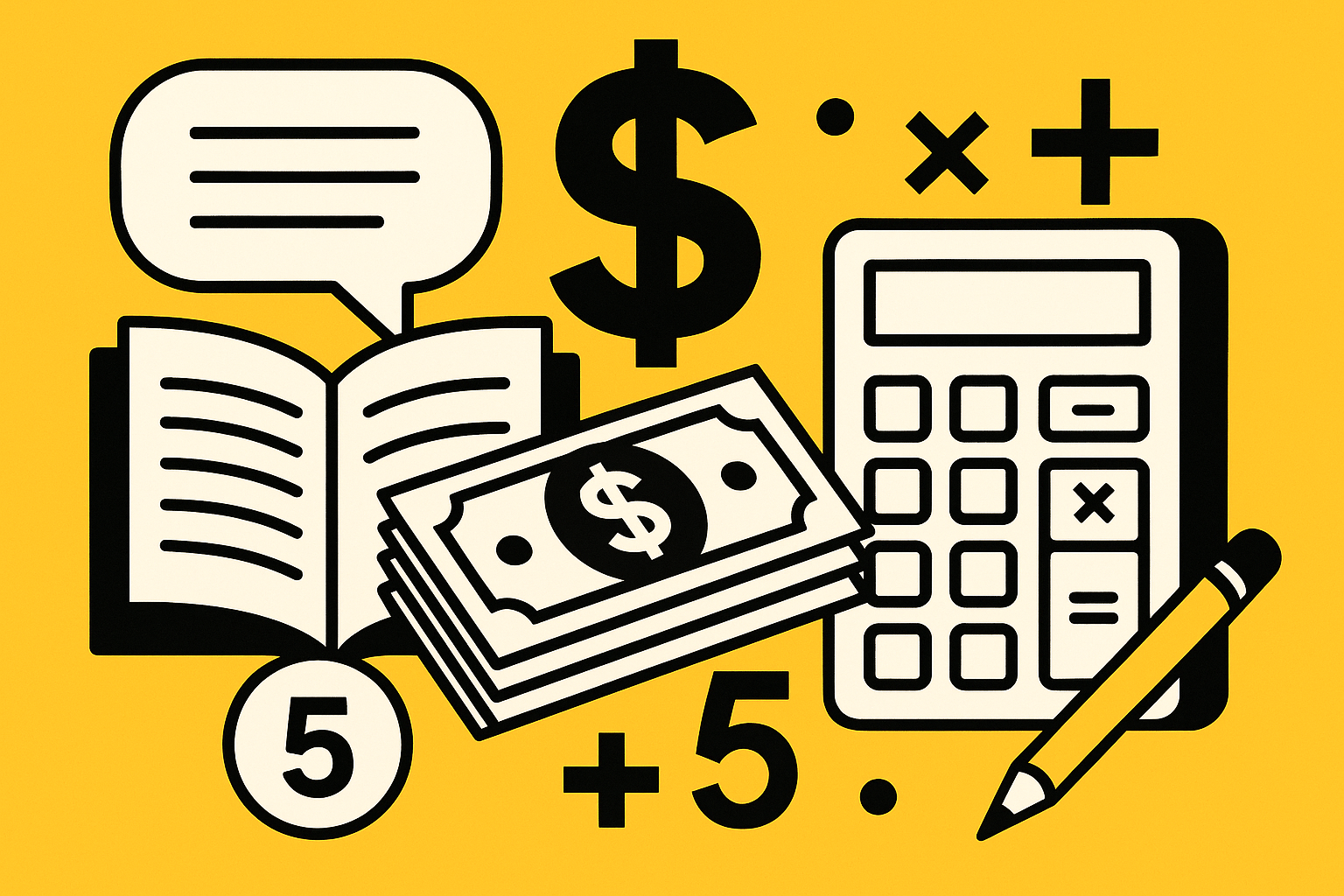
Why Literacy and Numeracy Matter: The Real-World Value of Words and Numbers
Understanding words and numbers is about more than reading and counting—it’s about navigating daily life. When literacy and numeracy are taught together, especially through practical lessons like managing money, students gain skills that empower them to make smart choices, plan for the future, and take part in the wider culture of their community.
Literacy and numeracy are often discussed as separate skills, but together they form the foundation of how we understand and participate in the world around us. Literacy gives us the ability to read, write, and communicate ideas, while numeracy enables us to work with numbers, reason through problems, and make informed decisions. When these skills are taught alongside each other—especially in the context of real-world challenges like managing money—students gain lifelong tools for success.
In classrooms today, practical learning is key. For example, many educators are now embedding money management directly into mathematics lessons. Rather than treating 'money maths' as an add-on, teachers are using everyday financial scenarios—like shopping on a budget, comparing discounts, or saving for a goal—to make maths feel relevant and useful. This kind of hands-on learning helps students see the value of numeracy beyond the classroom walls.
Consider how vital numeracy is for making decisions in daily life. When you buy groceries, you compare prices to get the best deal. If you save up for a holiday or a new gadget, you practice budgeting, setting aside small amounts over time. Even understanding a mobile phone bill, working out interest on a bank account, or planning how to split a restaurant bill with friends all require both literacy and numeracy. Without basic skills in both areas, making sense of these everyday situations can become difficult.
Financial education also highlights the importance of critical thinking and informed decision-making. When students learn to read the fine print on a contract, interpret terms like 'interest rate,' or evaluate different payment options, they are practicing both literacy and numeracy. They learn new vocabulary while applying mathematical concepts, which builds confidence in managing personal finances. This integrated approach prepares young people and adults alike to navigate the increasing complexity of modern economic life.
Teachers and educational organisations worldwide are recognising this connection. For instance, the National Numeracy charity and other educational groups provide lesson plans and resources that help students practice comparing costs, budgeting, saving, and evaluating different payment methods. Meanwhile, curriculum guides explain important money terms and encourage practical experiences, such as planning a simple budget or exploring how banks work.
Developing literacy and numeracy is not just about passing tests; it’s about participating fully in society. People with strong skills in both areas are better equipped to avoid scams, choose affordable loans, and plan for the future. Perhaps most importantly, they are empowered to make the kinds of choices that shape their lives and contribute positively to the culture around them.
In short, when practical numeracy and literacy education meets real-world experience—especially around everyday money matters—it opens doors. It turns numbers and words into tools for independence, self-reliance, and meaningful connection with others, ensuring everyone has a fair opportunity to thrive.