Ancient Accounting: The Beginnings of Bookkeeping and Money Management
Long before modern spreadsheets and calculators, ancient civilizations devised ingenious ways to keep track of goods, debts, and finances. The story of ancient accounting is not only fascinating—it is also a practical lens through which we can understand the origins of mathematics, the use of money, and the organization of our world’s first economies.
When we think about accounting today, images of calculators, ledgers, and taxes might come to mind. However, the roots of accounting reach far into ancient history—long before computers or even coinage existed. Accounting developed alongside the rise of civilization, serving a critical role in organizing complex societies and supporting the birth of commerce. Understanding ancient accounting helps us appreciate not only how math and money are intertwined in human progress, but also how practical problem-solving skills have always been vital in everyday life.
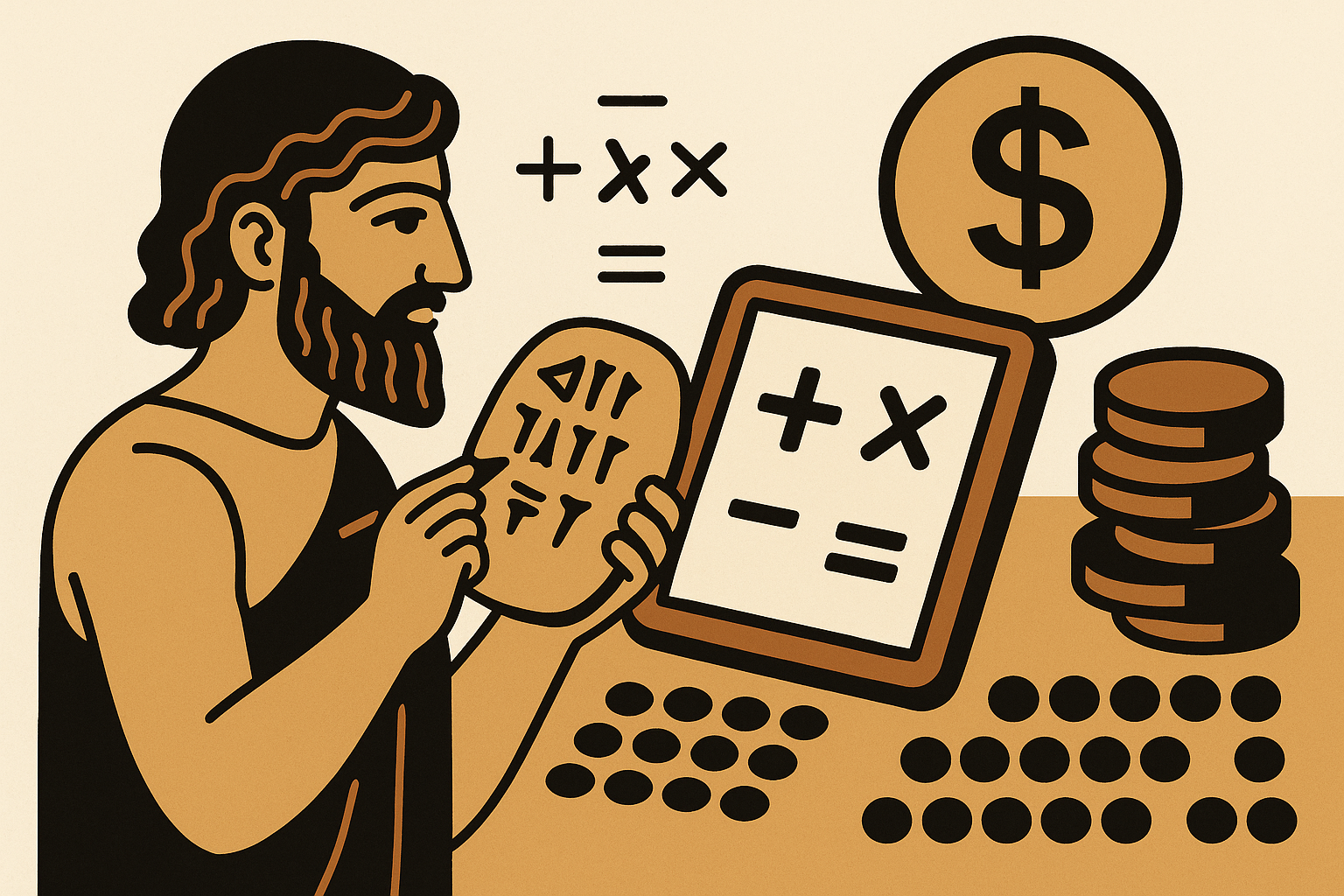
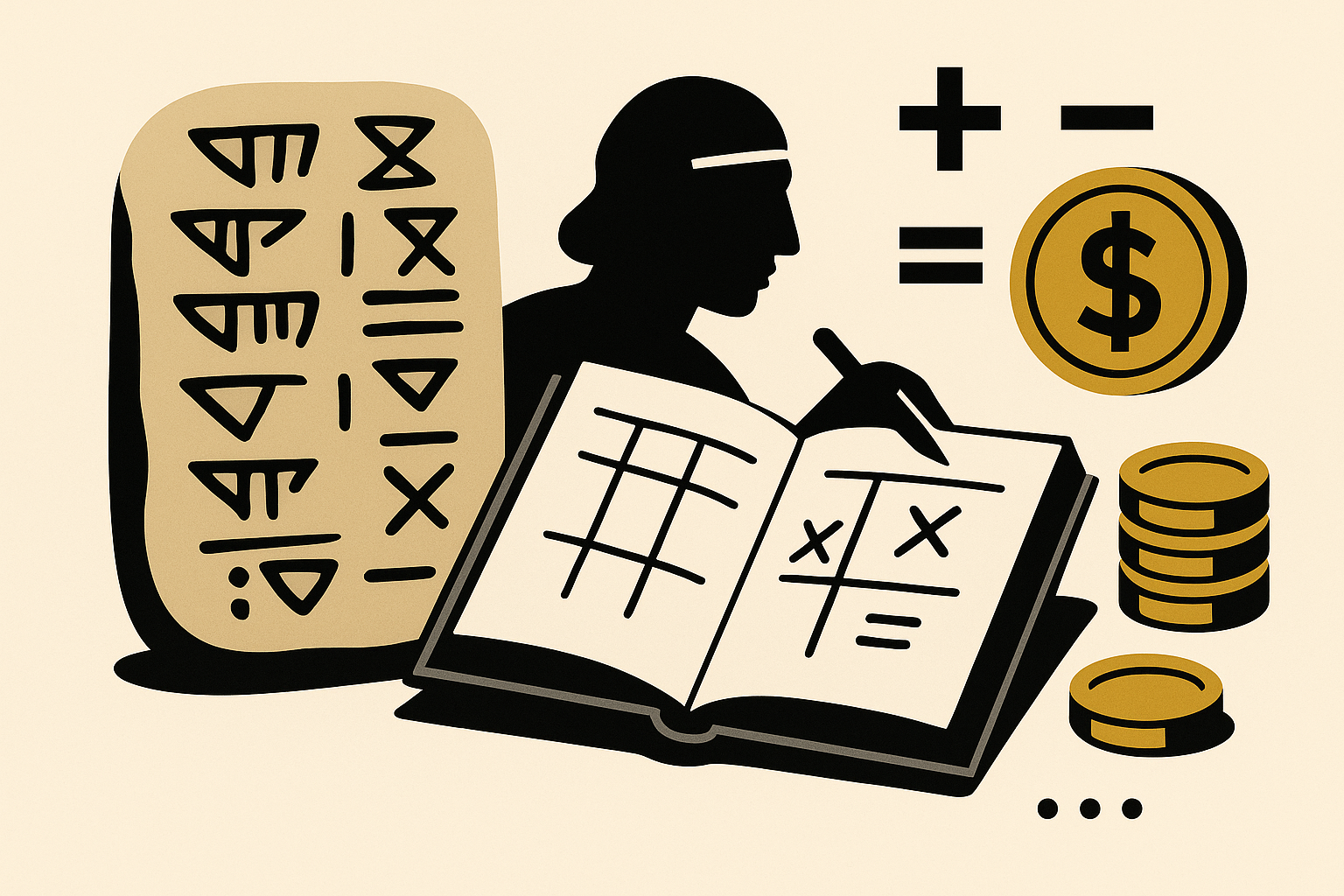
The earliest known records of accounting date back more than 7,000 years, to ancient Mesopotamia—which is often described as the cradle of civilization. In the bustling cities of Sumer, scribes used clay tablets to record the quantities of grain, livestock, or silver being exchanged or stored. These careful records helped leaders manage the temple’s assets, keep track of taxes, and ensure fair trade within the city-states. Early forms of writing, such as cuneiform, were developed in part to meet these bookkeeping needs. Accounting, in this sense, was not just about money, but about accountability and trust.
Mathematics played a central role in these ancient accounting systems. Scribes had to calculate totals, subtract debts, and distribute goods. Basic arithmetic—addition, subtraction, multiplication, and division—was taught as a practical skill, essential for daily business, from the market stall to the palace treasury. For example, imagine a temple needing to divide 1,000 bushels of barley among 50 workers; such problems required mathematical thinking, and simple word problems like this appeared in the earliest known mathematics textbooks.
Ancient accounting was also deeply connected to the concept of money. While coins as we know them appeared later, these societies used other units of account, such as pieces of silver or standard measures of grain. A unit of account is essentially a standard way to measure value, making it possible to compare, exchange, or store wealth. Instead of trading cows for pots or bread for tools, merchants could assign values to goods using a common standard, simplifying trade and economic planning.
One of the most influential developments in accounting was double-entry bookkeeping, which emerged much later in Renaissance Italy. However, even in the ancient world, similar systems existed in rudimentary forms. Accountants would enter an amount both as a debit (what was owed) and as a credit (what was received), ensuring accuracy and catching errors. These early records were often kept on clay tablets, papyrus, or carved stones, and some tablets found in Mesopotamia detail complicated commercial transactions with astonishing clarity.
The practical importance of ancient accounting systems cannot be overstated. With accurate records, ancient governments could collect taxes more effectively, plan massive construction projects, and maintain order in their economies. Even today, the ability to keep and interpret financial records is a fundamental part of every business, organization, and government.
For students and lifelong learners, the story of ancient accounting offers a reminder that math and money are much more than abstract topics or chores. They have always been practical tools, created to solve real problems and improve lives. By studying how our ancestors managed resources, balanced accounts, and innovated with early mathematics, we gain valuable insight into the enduring skills that guide commerce, cooperation, and civilization itself.