Math Education: Building Real-World Skills Through Practical Learning
Mathematics education is vital for everyday decision-making, from budgeting to shopping. By focusing on practical methods and clear explanations, math teachers help students connect abstract concepts to their real lives, making the subject both accessible and essential. In this article, we explore how math is taught around the world and why connecting lessons to real-world money matters can make learning more meaningful.
Math education is often viewed as a collection of formulas, equations, and abstract concepts. For many students, this approach can make mathematics seem distant from their everyday experiences. However, educators around the world are rethinking how math is taught, emphasizing practical learning and clear explanations that help students see direct connections between mathematics and real life. This shift reflects the growing recognition that mathematical skills are not just academic requirements but essential life tools.
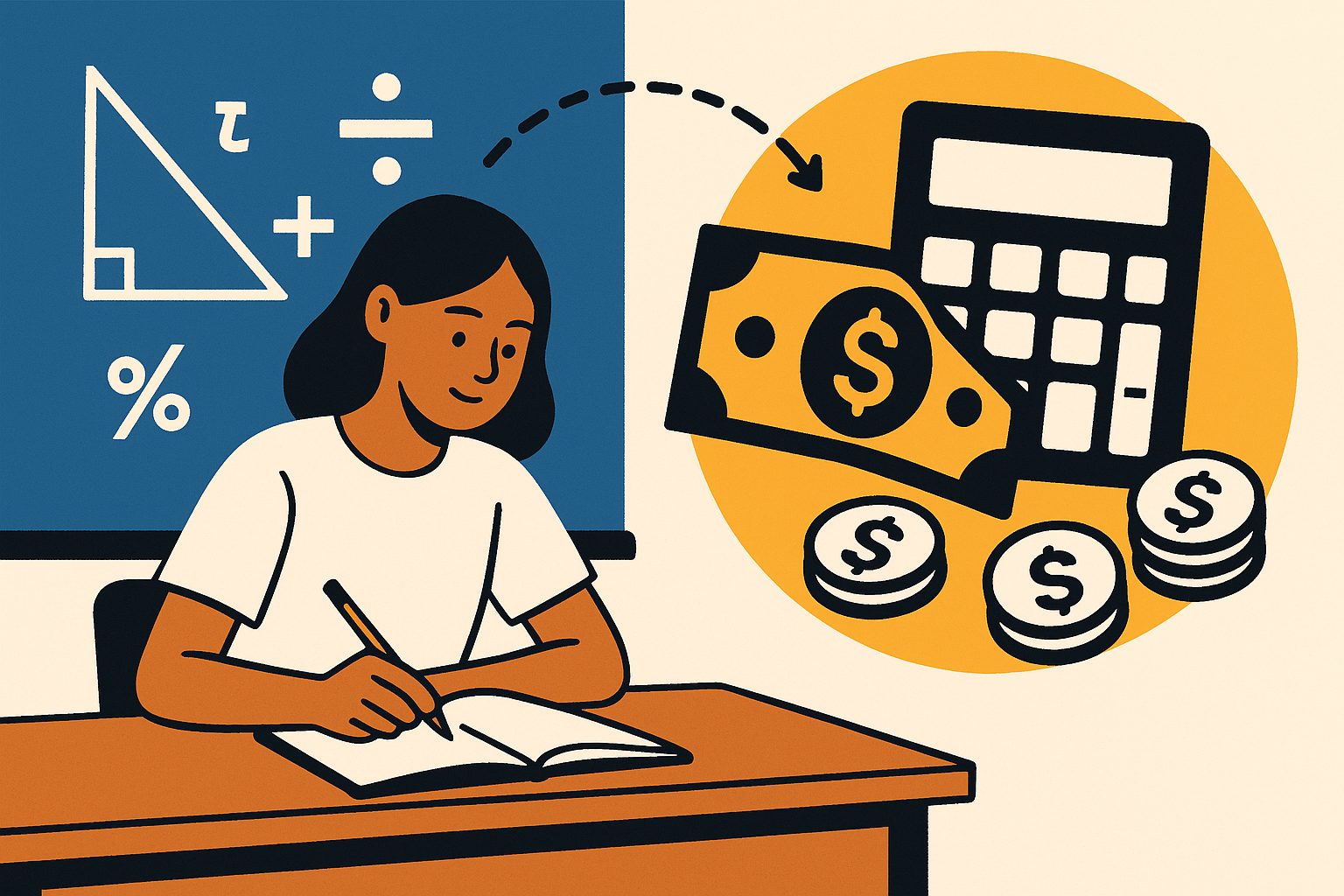
One of the most powerful ways to make math meaningful is by tying lessons to real-world situations—especially those involving money. For example, calculating discounts during a sale, understanding loans and interest, or simply creating a monthly budget all require fundamental math skills such as percentages, addition, subtraction, multiplication, and division. When students engage in these activities, they not only gain confidence in their abilities but also learn how mathematics empowers smart financial decisions.
Internationally, many education systems approach math instruction with a focus on clarity and application. The Singapore math method, for instance, is renowned for its emphasis on deep understanding through visualization and problem-solving. Teachers encourage students to break down problems into simpler parts and use models or diagrams, which makes it easier to grasp even complex operations. In the United States, schools increasingly adopt interactive curricula, using group work, discussions, and hands-on activities to make math less intimidating and more collaborative.
Practical math education often involves activities that mirror adult responsibilities. Younger students might run a classroom store, learning to make change and track inventory. Older students may analyze interest rates on savings accounts or calculate the cost of a car loan. By confronting these real-world scenarios, students develop critical thinking skills and a practical sense of financial literacy—both of which are crucial for personal independence.
Clear explanations are also key. Instead of simply memorizing steps, students benefit from understanding why a particular method works. For instance, when learning the concept of multiplication, teachers might demonstrate how skipping repeated addition can quickly determine the total cost of several identical items, like buying six tickets each priced at $8. This context makes abstract concepts tangible and helps students transfer their skills beyond the classroom.
Of course, challenges remain. Across different regions, approaches to math teaching, available resources, and expectations vary widely. Some education systems, such as those in France or Japan, perform strongly in international assessments, likely due in part to consistent curricula and a focus on problem-solving. Others continually seek the right balance between rote practice and practical application. Despite these differences, the common thread is clear: engaging students with meaningful, real-life examples builds both skill and confidence.
In an era when financial literacy is essential, math education that links numbers to real money matters can help students make informed choices—from comparing prices while shopping to planning for future expenses. By grounding mathematics in everyday experiences and offering clear explanations, educators ensure that math is not just a subject but a lifelong asset.