Understanding Algebra: More Than Just Numbers
Algebra is a foundational branch of mathematics that serves as a bridge between basic arithmetic and more advanced topics. Often viewed as abstract, algebra is in fact deeply tied to real-world situations, especially when it comes to money, budgeting, and problem solving.
For many students and parents alike, algebra marks a turning point in mathematics education. Instead of simply working with numbers, learners start manipulating symbols and exploring relationships. Algebra introduces a new language—one where letters like x and y stand in for unknown values, opening the door to deeper understanding and practical problem solving.
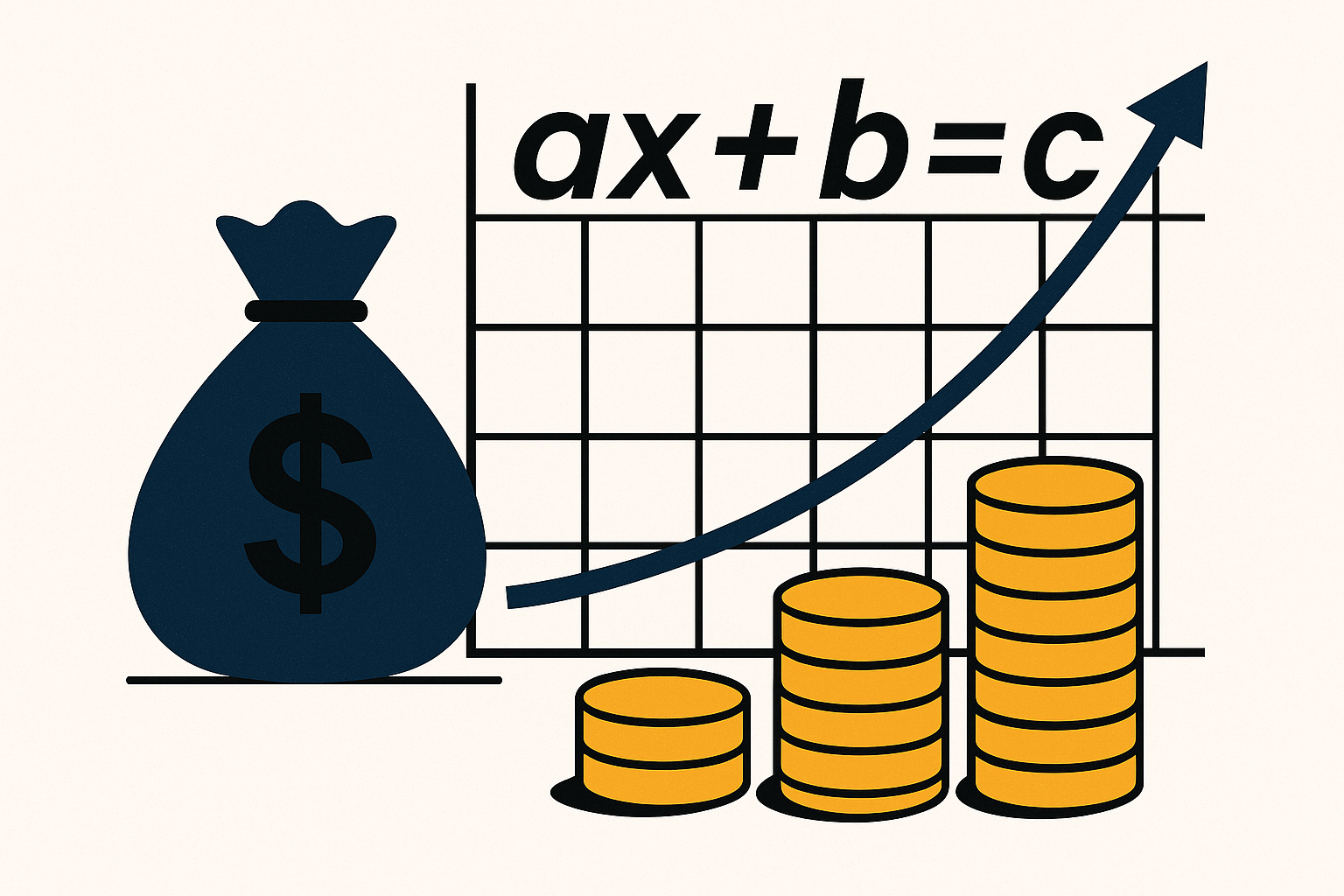
What exactly is algebra? At its heart, algebra is about finding patterns and expressing them through equations. An equation is like a balance, showing that two expressions have the same value. For instance, if you spend $2 on each sandwich and buy x sandwiches, your total is 2x dollars. Algebra allows us to express—and solve—questions like: 'How many sandwiches can I buy for $10?' (The answer: x = 10/2 = 5 sandwiches.)
Across the world, algebra is a core part of school mathematics. In the United States, students typically encounter pre-algebra in middle school, followed by Algebra I and II in high school. This progression builds skills for later studies in geometry, statistics, and calculus. Yet, algebra isn’t just for those pursuing STEM careers. It’s a valuable life skill, forming the foundation for logical thinking, analysis, and decision making.
Algebra’s impact is most obvious when it comes to money. Consider managing a budget. Suppose you earn a certain amount per month and need to cover various expenses. Algebra lets you set up equations to plan your spending, solve for unknowns, and make adjustments. For example, let’s say your total monthly budget is $2000. Rent costs $900, groceries $250, and transportation $100. If you want to figure out how much you can spend on entertainment (e), the equation looks like this: 900 + 250 + 100 + e = 2000. Solving for e gives you $750. This simple use of algebra helps people make sound financial decisions without overspending.
Shopping provides another everyday example. Imagine you find a sale: 'Buy one, get the second at 50% off.' If the regular price of a shirt is $30, how much will you pay for two? Algebra helps set up the problem: 30 (first shirt) + 0.5 × 30 (second shirt) = $45. Not only does this show the savings, but it also helps you compare deals mathematically—an essential skill for everyone, regardless of age or background.
Many people see algebra as a hurdle, but it’s a powerful tool for making sense of the world. Understanding how to set up and solve equations translates directly to tasks like planning trips, comparing mobile phone plans, or calculating loan payments. Businesses, too, rely on algebra to forecast sales, set prices, and maximize profits. Even if you never use terms like 'variable' or 'coefficient' in conversation, the reasoning skills developed through algebra last a lifetime.
Learning algebra can sometimes feel abstract, but connecting lessons to everyday scenarios makes the subject more accessible. Teachers are increasingly aware of this, striving to highlight the real-world implications of algebraic thinking in the classroom. This practical approach not only improves student understanding but also prepares them for challenges outside school—proof that algebra, far from being a mere academic hurdle, is a vital part of everyday life.