Understanding Compound Interest Calculators: The Power of Mathematics in Growing Money
A compound interest calculator is more than a financial tool—it's a practical application of mathematics that helps you visualize how money grows over time. By harnessing the principles behind compound interest, anyone can better plan for savings, investments, and financial goals. Let's explore how these calculators work, why compound interest is so powerful, and how this essential math shapes everyday financial decisions.
Compound interest is a fundamental concept in both mathematics and personal finance. Unlike simple interest, which is calculated on the original amount only, compound interest is calculated on the principal plus any previously earned interest. This process, repeated over time, results in money 'compounding'—effectively, your interest earns interest.
But how can you easily figure out just how much your savings or investments might grow using compound interest? That’s where a compound interest calculator comes in. These calculators, available online and often on banking apps, provide a quick and user-friendly way to project how your money could increase over time—without needing to do complex calculations by hand.
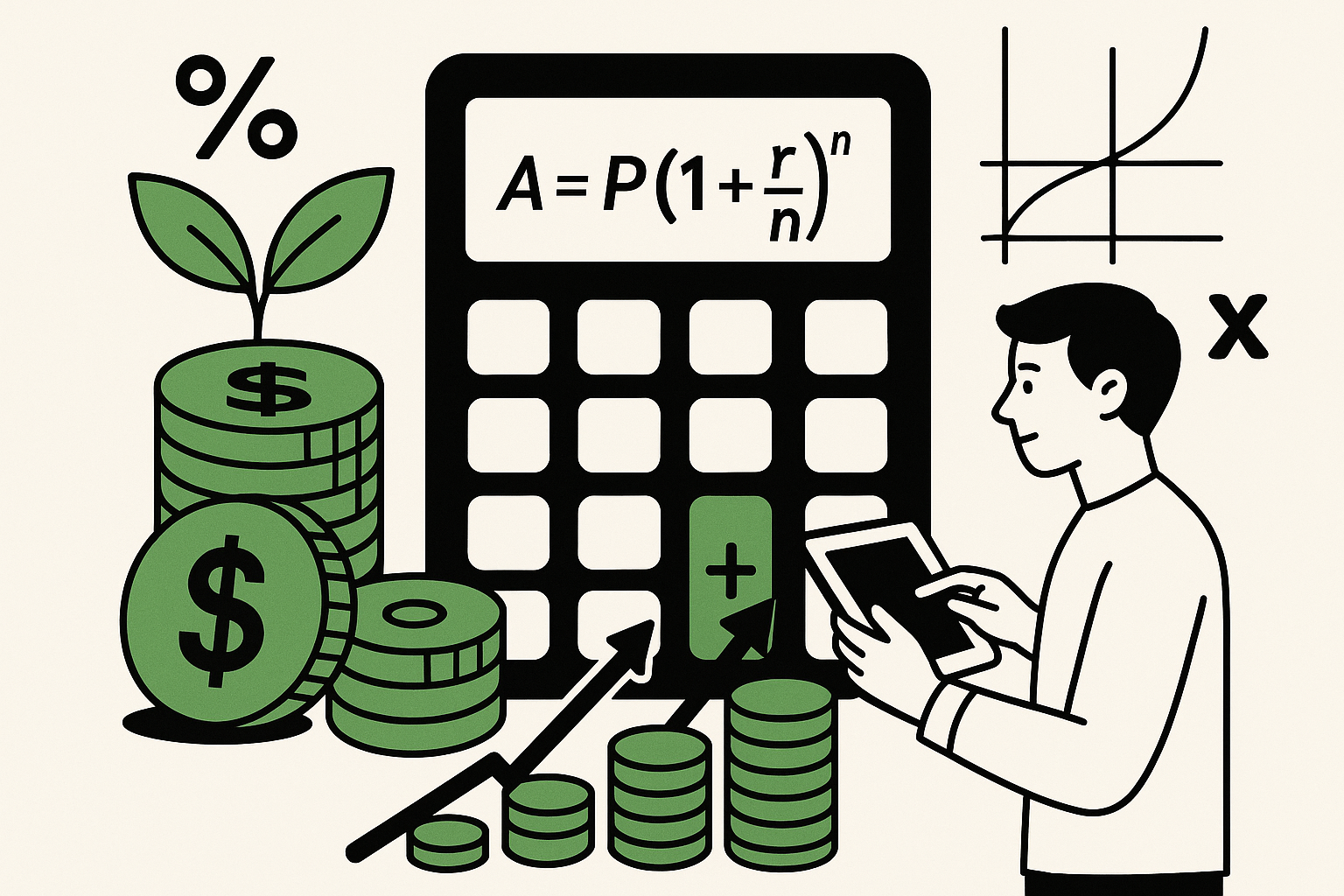
A typical compound interest calculator asks you to input your starting amount (principal), the interest rate, the number of times interest is compounded per year, the number of years you plan to keep your money invested, and (sometimes) any additional regular contributions. The calculator then applies the compound interest formula:
A = P(1 + r/n)^(nt)
Here, 'A' represents the amount in the account after t years, 'P' is the starting principal, 'r' is the annual interest rate (as a decimal), 'n' is the number of times interest is compounded per year, and 't' is the number of years invested.
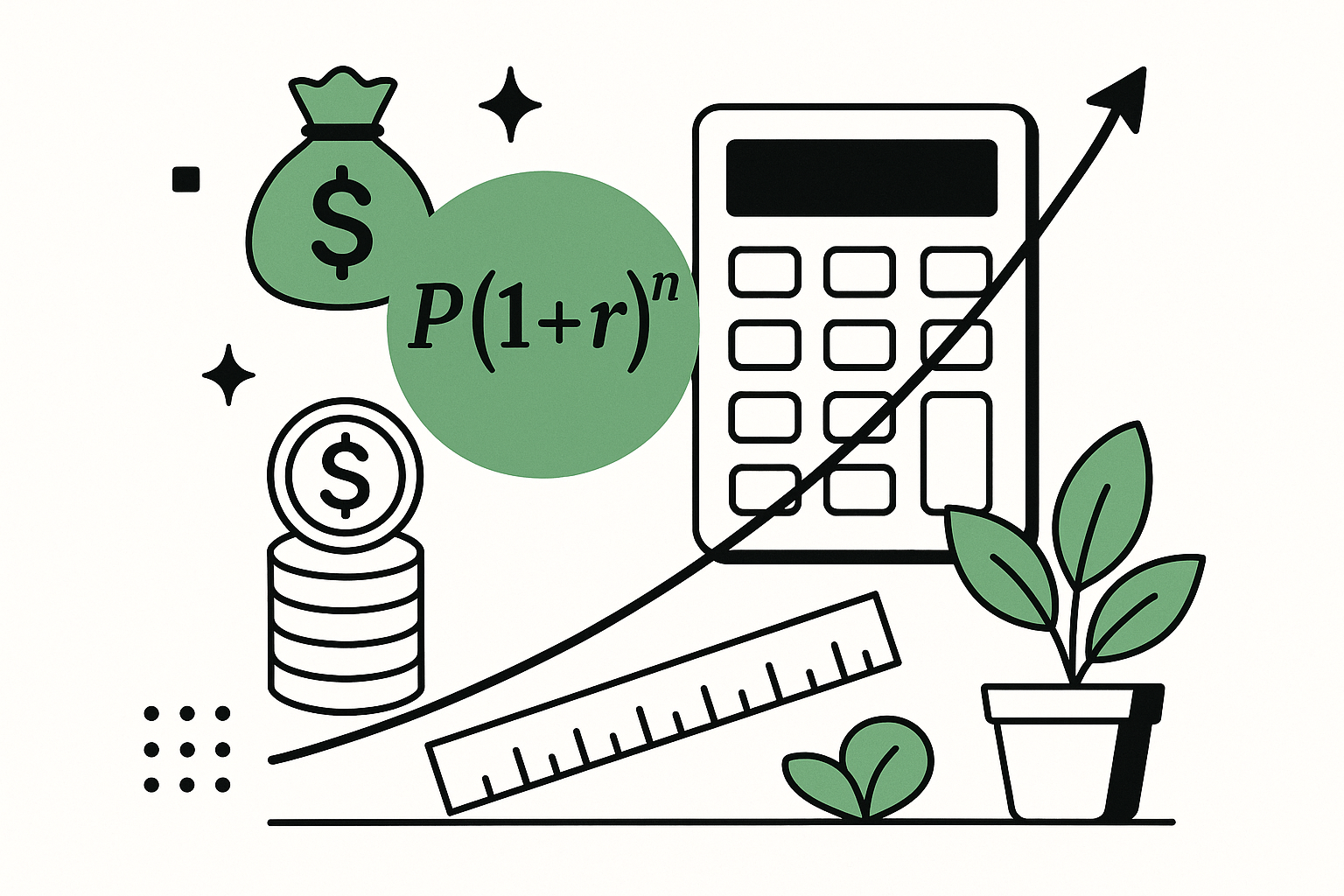
The magic of compound interest comes from repeated multiplication (as shown by the exponent). For example, if you deposit $1,000 at an annual interest rate of 5% compounded yearly for 10 years, the calculator shows that your savings will grow to about $1,628, not just $1,500 as in the case of simple interest. This extra $128 is interest on the interest—a small difference at first, but over decades, compounding can have dramatic effects.
This principle is so powerful that Albert Einstein reportedly called compound interest the 'eighth wonder of the world.' While the quote's origin is debated, its spirit holds true: the earlier you start saving or investing, the more you benefit from compounding. Compound interest calculators reveal just how significantly time can magnify even modest savings.
Historically, the concept of compound interest has shaped business and economic transactions since the Middle Ages, and systematic calculations were performed well before computers existed. Early financial experts used complex math—and sometimes even mechanical calculators or slide rules—to determine future values of investments. Today, with accessible web-based calculators, anyone can harness centuries-old financial wisdom using simple technology.
There are everyday applications too. Banks use compound interest to compute account balances, investors use it to forecast retirement savings, and businesses rely on it for growth projections. Even topics like inflation—how prices increase over time—follow similar compound mathematics, further highlighting the connection between compound interest and real-world economics.
Learning to use a compound interest calculator not only helps with making better financial decisions but also demonstrates the practical power of mathematics. It connects mathematical constants, such as 'e,' to tangible, everyday life. By experimenting with different numbers in a calculator, students and adults alike gain a deeper understanding of how investments grow and why patience and consistency are key to financial success.
In summary, compound interest calculators are invaluable tools for anyone who wants to plan and understand their financial future, showcasing the real-world impact of mathematical principles and equipping people to make smarter choices with their money.