Understanding Money Laundering: What It Means and Why It Matters
Money laundering is an often-heard but little-understood term. This article clarifies its meaning, explores how it works, and highlights its impact on society and the economy, making math and real money connections along the way.
When people hear the term 'money laundering,' they might imagine criminals washing stacks of cash or plotting in secrecy. But what does money laundering really mean, and why should it matter to everyday people? In this article, we will break down the meaning of money laundering, how it happens, why it's illegal, and how math and real-world money are involved.
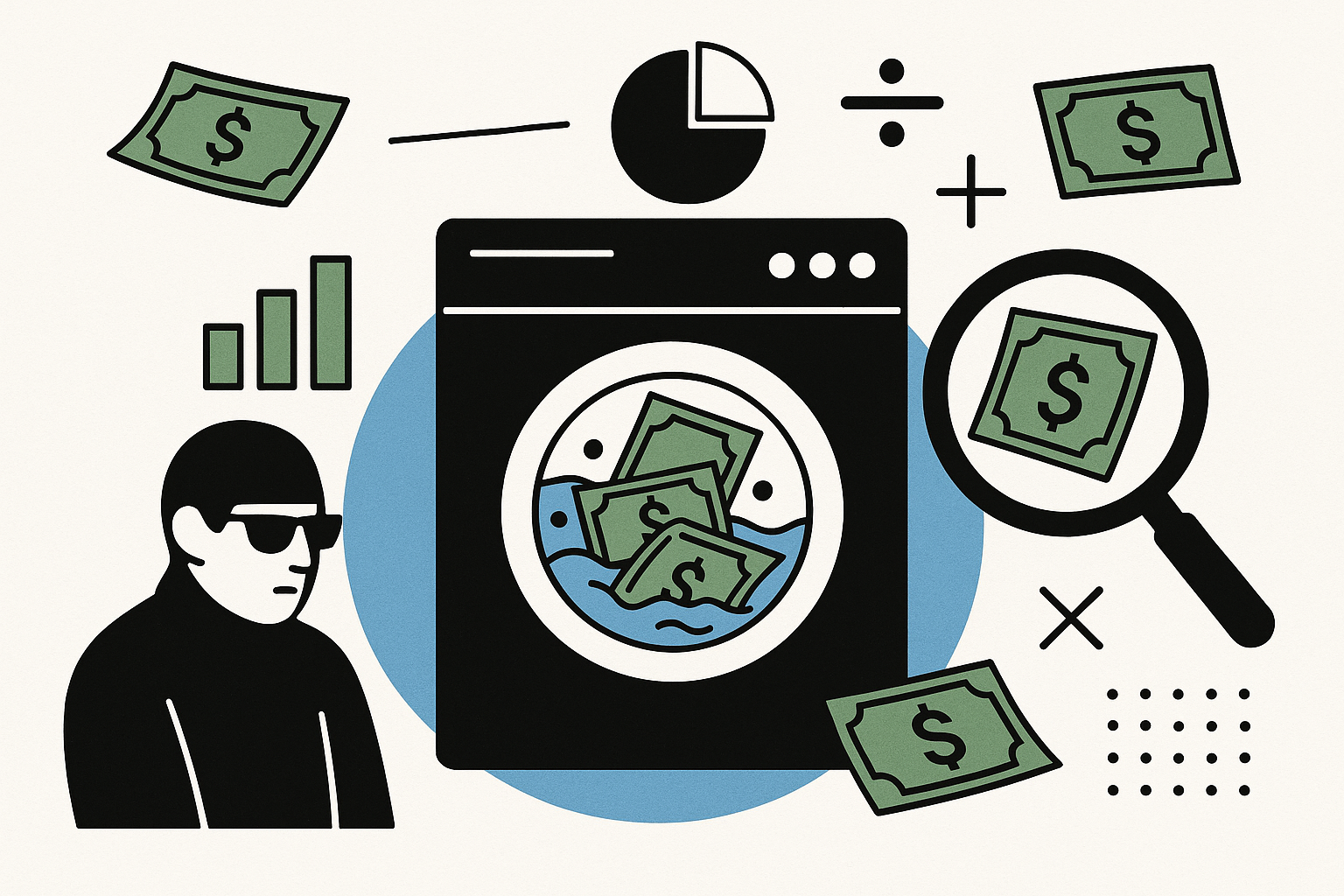
At its core, money laundering refers to the process by which criminals disguise the origins of money gained through illegal activities—such as theft, fraud, drug trafficking, or corruption—so that it appears to be from legitimate sources. In simple terms, it is turning 'dirty' money into 'clean' money that looks like it came from honest work. The name itself comes from the idea of 'laundering' or cleaning something that is soiled.
Let’s take a basic example: Imagine someone has made a large amount of cash through an illegal lottery ring. If this individual simply tries to deposit all that cash into a bank, the bank will likely ask questions about its origin. Instead, the person might try to move the money through a series of transactions—buying and selling items, investing in businesses, or moving it across borders—so that it looks like the money came from law-abiding activities.
Money laundering typically happens in three steps: placement, layering, and integration. In the placement stage, the money is first introduced into the financial system, sometimes by breaking up large amounts into smaller deposits (a process called 'smurfing') to avoid triggering reporting requirements. In the layering stage, the launderer moves the money between different accounts, often using complex transactions—which can include buying cryptocurrency, trading stocks, or wiring funds internationally—to obscure its origins. Finally, in the integration stage, the money is returned to the launderer in a way that appears legitimate, such as through investment profits, sale of luxury goods, or business income.
The financial and mathematical aspects of money laundering are critical. Criminals often rely on their understanding of banking rules, currency exchange rates, and electronic transaction limits. For example, many jurisdictions require banks to report deposits over a certain threshold (like $10,000 in the United States). To avoid detection, launderers might deposit $9,900 at a time, multiple times, intentionally keeping each transaction under the reporting limit. This requires precise mathematical planning, careful record-keeping, and sometimes specialized knowledge of international finance.
But why is money laundering illegal? The answer is that it enables crime to pay. If criminals can safely use the proceeds of their activities, it encourages further illegal behavior. Money laundering also harms economies and societies, distorting markets, undermining trust in financial institutions, and sometimes even financing terrorism. This is why rules and agencies dedicated to anti-money laundering (AML), such as the Financial Action Task Force (FATF) and central banks, are so important.
Furthermore, the impact of money laundering is not just theoretical. In real life, cities such as London and New York have been noted as major international hubs where large-scale laundering schemes have been uncovered. From fine art to real estate, laundered money can flow into many sectors, potentially inflating prices and making it harder for honest citizens to buy homes or start businesses.
Education about money laundering helps people understand how financial crimes operate and why transparency in financial transactions is necessary. With the rise of new technologies and digital currencies, detecting and preventing money laundering has become even more complex, requiring sharper math skills, new analytics, and international cooperation.
In summary, money laundering is the illegal process of making 'dirty' money look 'clean.' While the idea can sound distant or complex, its effects touch everyone—from the stability of financial institutions to the fairness of global markets. Understanding the basics, especially the money and math involved, is an important skill in today's world.