A Journey Through the History of Mathematics: From Ancient Counting to Modern Money
Mathematics has shaped societies for millennia, influencing everything from trade to technology. This article explores the historical development of mathematics, its crucial role in daily life, and its practical connections with money and economics.
Mathematics is often seen as a set of rules and formulas, but its story is much richer. The history of mathematics stretches back thousands of years, and its concepts have had a profound impact on the development of civilization. From ancient counting systems to the mathematical foundations of today’s economies, understanding this history helps us see just how deeply math is woven into our everyday lives.
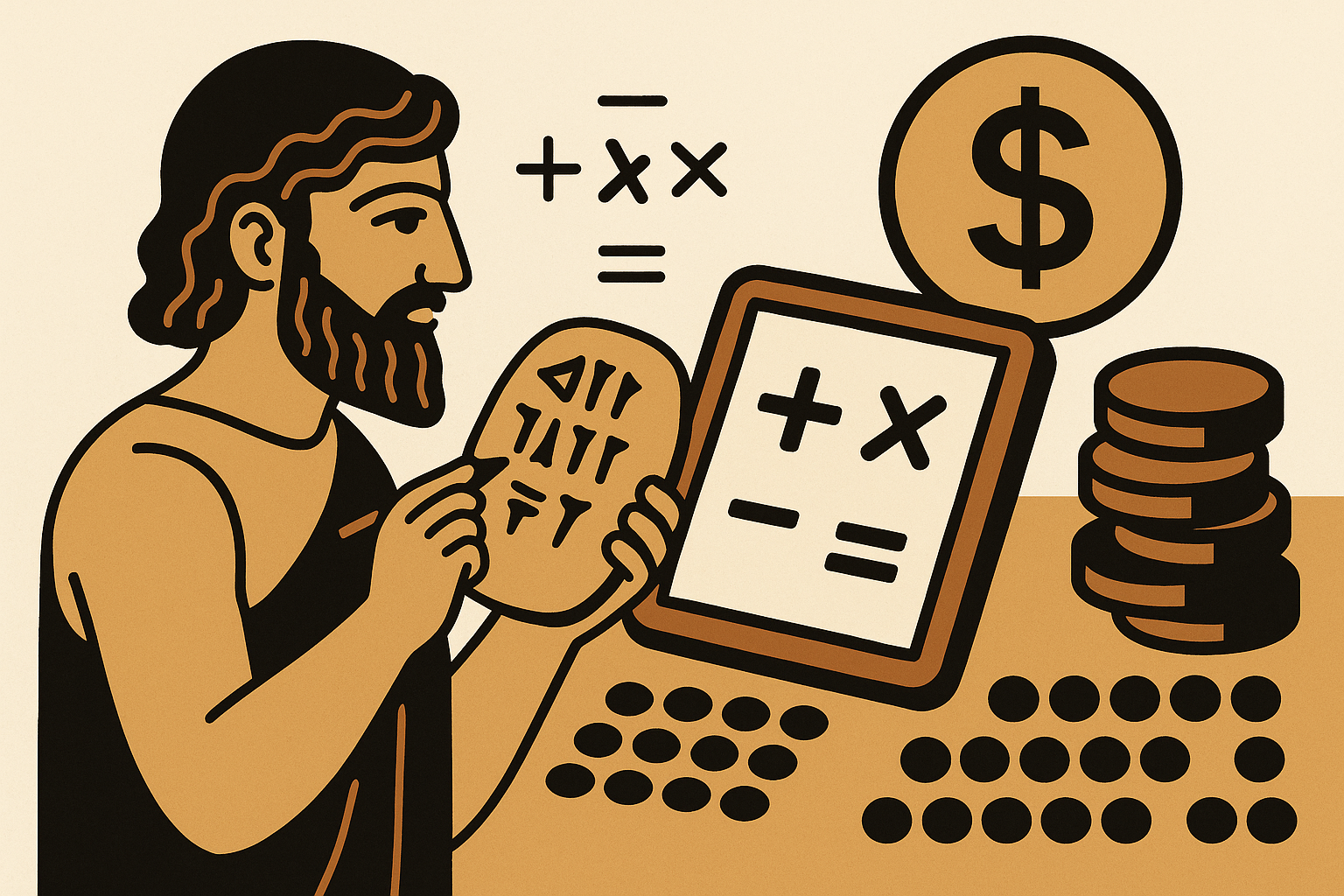
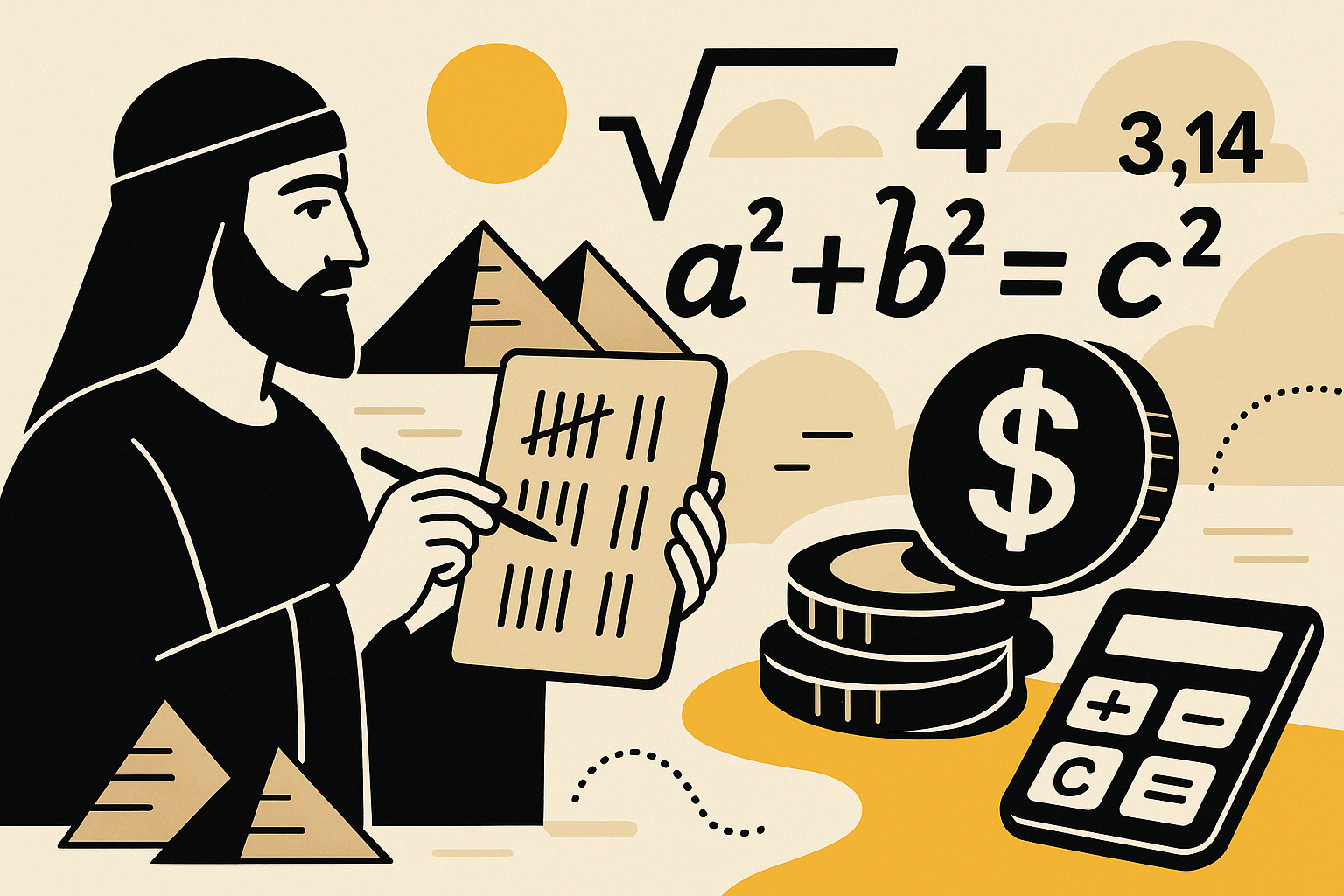
The earliest records of mathematics come from ancient civilizations such as Mesopotamia and Egypt. Here, people developed numbers and methods to count crops, divide land, and keep accounts for trade. The abacus, one of the earliest tools for calculation, appeared in these societies to ease and speed up daily business. Mathematics was always practical: it provided reliable ways to measure and exchange goods, influencing the very beginnings of money and commerce.
As societies became more complex, so did their mathematics. The Greeks introduced the idea of mathematical proof and formal geometry, laying the foundations for logical thinking. Indian mathematicians developed the concept of zero and advanced arithmetic methods, with their insights later transmitted to the European world through scholars in the Middle East. Many mathematical techniques described in the book 'Vedic Mathematics,' though published much later, draw upon a long Indian tradition of clever and efficient calculation, highlighting math’s long history of innovation.
In the Middle Ages, trade expanded across continents. Reliable mathematics became essential for keeping accurate financial records and performing currency conversions. The invention of negative numbers, fractions, and algebra helped merchants solve more complex problems, such as calculating profits and losses or dividing inheritance among heirs. As the need to solve real-life problems grew, so did the mathematical tools available.
During the Industrial Revolution and into the modern era, mathematics took on new forms to meet new challenges. The development of statistics, probability, and calculus opened doors in both science and economics. Economists began using mathematical models to predict supply and demand, set prices, and manage risk. The entire financial industry—from banking to insurance—relies heavily on mathematical thinking to make informed decisions.
Today, mathematics education focuses on helping students develop not only calculation skills but also problem-solving and logical reasoning. Mathematics education (or didactics of mathematics) aims to connect classroom concepts with real-world applications. For example, understanding percentages and interest rates is vital for managing personal finances, from budgeting grocery shopping to making decisions about loans or savings accounts. Mathematical constants such as π and e aren’t just abstract ideas—they pop up in real-life calculations, from construction to investments.
Teaching mathematics in a practical way helps learners see its direct impact. In the United States, different approaches and curricula aim to prepare students for ever-changing economic realities, while critical mathematics pedagogy emphasizes understanding the societal implications of mathematical ideas. Whether in the classroom or the marketplace, mathematics remains central to daily choices and larger economic trends.
The journey of mathematics—from the early tally marks to today’s complex financial models—shows that math is not just theory. It is a living subject, constantly evolving to solve new problems. Every time we balance a checkbook, compare prices, or analyze a loan offer, we are continuing a tradition begun by ancient mathematicians. Understanding the history of mathematics invites us to appreciate its beauty, usefulness, and the critical role it plays in managing our world’s resources—even our money.