The History of Mathematics: From Ancient Roots to Modern Money
Mathematics shapes how we understand the world, from ancient counting to today's complex economies. This article traces the history of mathematics, highlighting its evolution and real-world connections—especially in money and finance—while emphasizing practical learning and explanations.
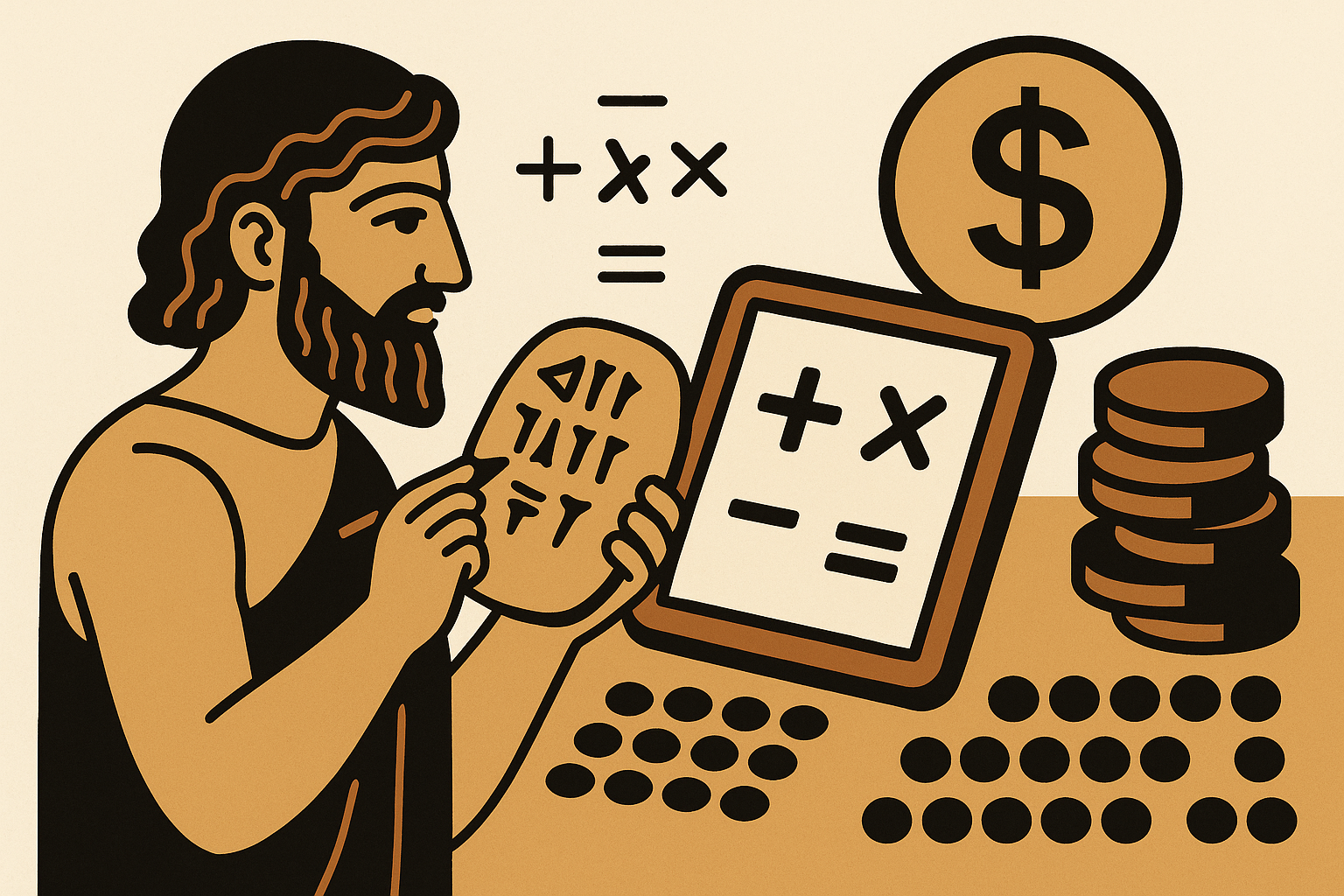
Mathematics, one of humanity’s oldest fields of study, touches nearly every aspect of daily life. Its history stretches back thousands of years, with evidence of mathematical activity in ancient civilizations such as Egypt, Babylon, and India. Long before classrooms and textbooks, people developed simple counting systems to keep track of possessions, trade, and measure land. This early practicality laid the groundwork for more abstract mathematical thinking.
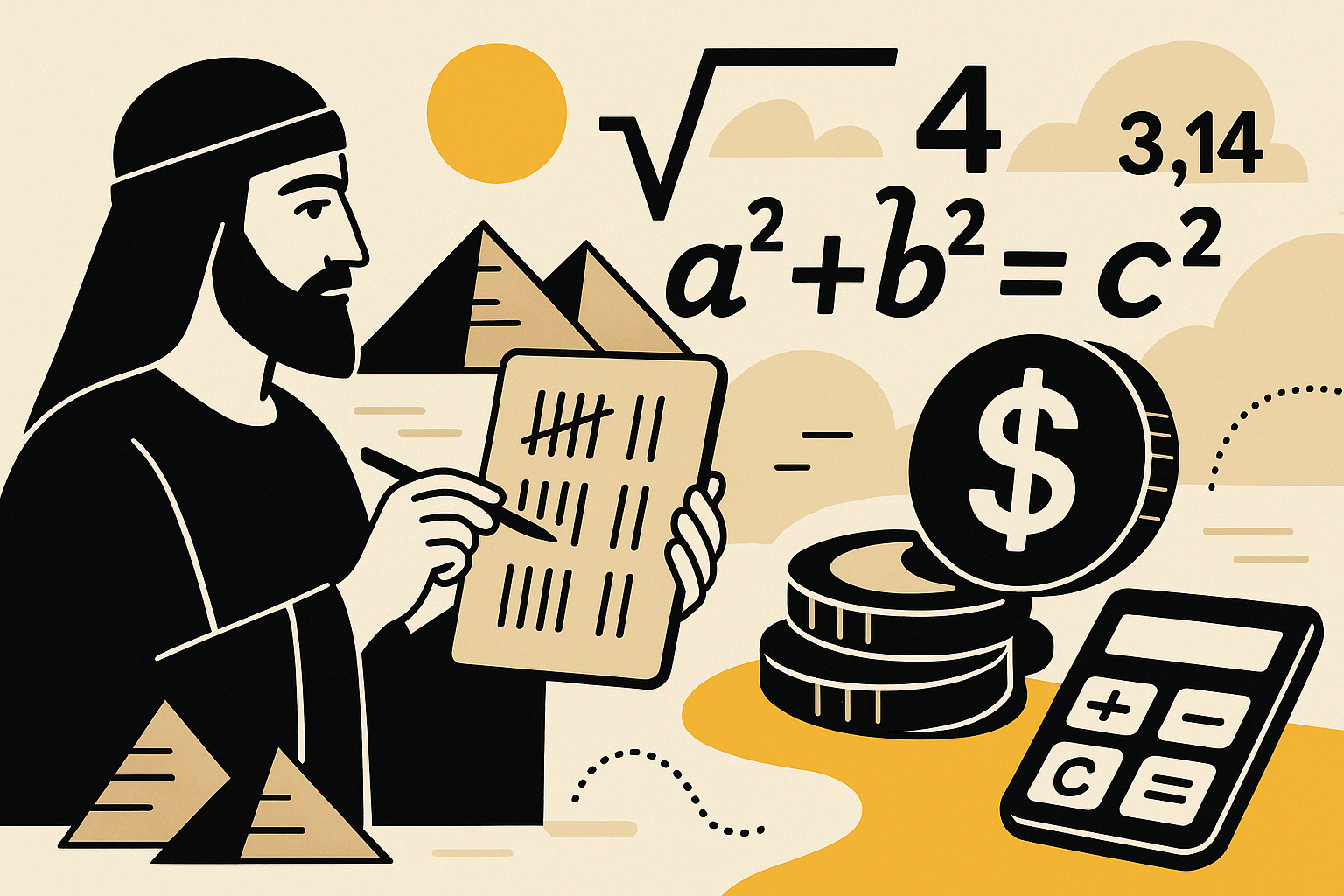
In ancient Egypt, mathematics was linked closely to commerce and engineering. Egyptians used a base-10 (decimal) system for counting and measuring, which proved essential in building the pyramids and performing financial transactions. Similarly, Babylonian society developed a base-60 (sexagesimal) system, influencing how we still divide time and circles today. Mathematics in these societies was not purely theoretical—it was a practical tool for trade, taxation, and infrastructure.
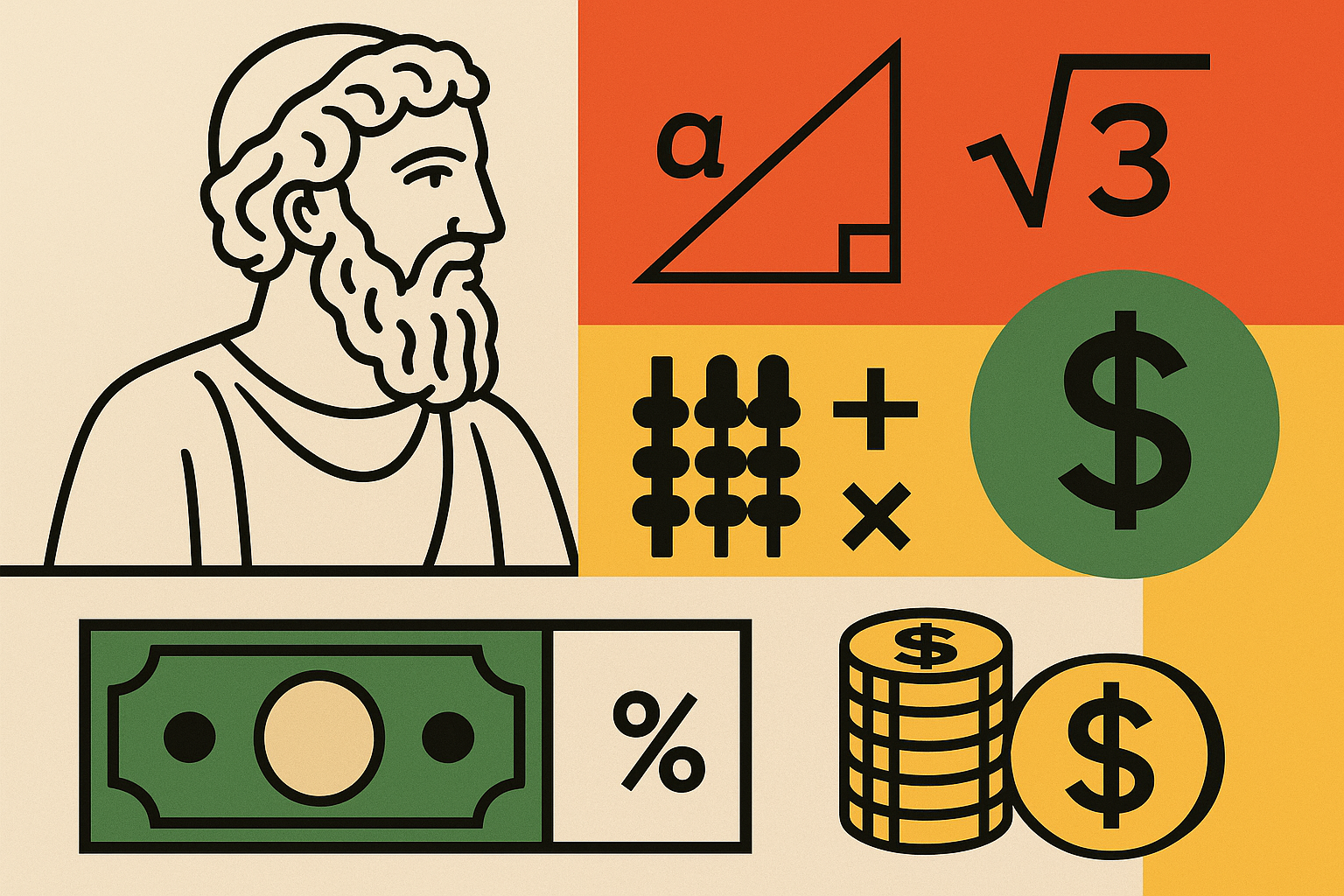
The Greeks made great strides in mathematical reasoning, introducing logical proofs and establishing mathematics as a deductive science. Figures like Euclid and Pythagoras moved mathematics from practical calculation to theoretical exploration. While the Greeks focused on geometry and logical structure, later Indian mathematicians contributed to the development of zero and the decimal place-value system—foundations for modern arithmetic.
In the medieval Islamic world, scholars translated and built upon Greek, Indian, and Persian texts. Algebra, which comes from the Arabic word 'al-jabr,' flourished, enabling new ways of solving problems involving unknowns. These mathematical advances spread along trade routes, influencing Europe during the Renaissance and eventually leading to the widespread teaching of arithmetic, algebra, and geometry in schools.
By the 17th century, with the rise of scientific discovery, mathematicians like Newton and Leibniz developed calculus, opening up entirely new realms of mathematics. These advances influenced everything from astronomy to engineering. Mathematics became central to economics and the natural sciences, creating the backbone for the modern technological world.
Today, mathematics education is a global practice, though it varies widely from country to country. In the United States, states and school districts set their own standards, sometimes aligned with frameworks like the Common Core. In Europe, the study is often called the 'didactics of mathematics,' focusing on methods that help students reason critically and apply concepts.
One of the most practical applications of mathematics is in understanding money. Mathematical concepts underpin financial literacy: calculating interest rates, writing budgets, and analyzing investments all require a grasp of arithmetic, percentages, and algebra. In the field of mathematical economics, these skills become even more vital. Mathematicians model economic behavior using equations and graphs to forecast market trends or optimize financial decisions.
For example, consider someone saving money in a bank account. Understanding how compound interest works—how interest accumulates on both the original sum and on prior interest—is a concrete use of mathematics in daily life. Similarly, budgeting household expenses, comparing loan offers, or making investment choices all rely on basic math skills.
Modern mathematics education emphasizes both the mastery of foundational skills and the ability to apply them to real-world problems. This means not just learning how to calculate, but also understanding when and why to use different methods. Innovative teaching approaches include problem-based learning and using real-life scenarios, such as planning a monthly spending plan or understanding how credit card payments are calculated.
In conclusion, the history of mathematics is a vivid story of practical problem-solving and creative thinking. From ancient tools used in trade to today’s sophisticated financial models, math has always served as a bridge between abstract ideas and concrete needs. By connecting historical context to everyday applications, particularly in money and finance, mathematics education remains a vital foundation for navigating our complex world.