Algorithmic Trading: The Math-Powered Revolution Reshaping Finance
Algorithmic trading is quietly transforming the world’s financial markets by employing mathematics, technology, and lightning-fast computers to trade assets intelligently. This article explains how algorithmic trading works, its mathematical foundations, and its connections to real-world money management, providing clear insights for anyone curious about the technological heart of modern finance.
Imagine a world where trades in financial markets are made not by shouting traders in crowded pits, but by silent, ultra-fast computers following precise instructions. This is not science fiction—algorithmic trading, or 'algo trading,' is now a central force in markets worldwide, moving billions of dollars each day. But how does algorithmic trading actually work, and why are both mathematicians and programmers in such high demand on Wall Street?
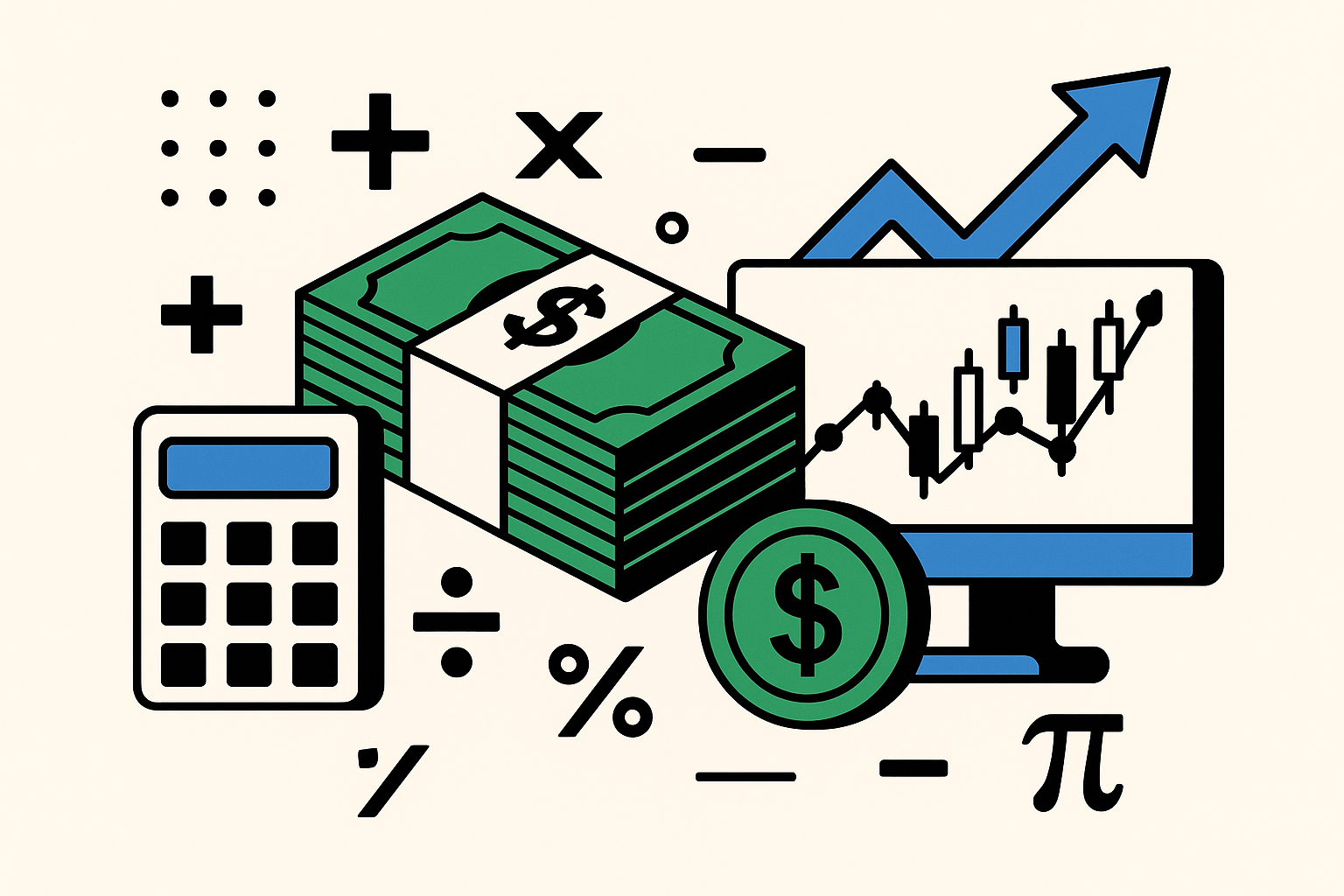
At its core, algorithmic trading involves using computer programs—algorithms—to automatically make buying or selling decisions in financial markets. These algorithms rely on mathematical rules and historical data to determine when and what to trade. For example, an algorithm might be instructed to buy a stock if its price drops by 3 percent in one day and sell it if it rises by 5 percent. The decisions are made rapidly, sometimes in just microseconds, far faster than any human could react.
Why use algorithms? Human traders can get overwhelmed by market information and may be influenced by emotion. By contrast, algorithmic trading systems are designed to be consistent, logical, and fast. They can scan thousands of stocks or currencies at once, quickly acting on events like price movements, earnings announcements, or even breaking news.
Algorithmic trading is driven heavily by mathematics and statistics. At firms like the one started by Haim Bodek, or Jane Street where Brett Harrison led system development, teams use a variety of mathematical models. These may include statistical arbitrage (finding small, predictable price differences between markets), momentum trading (identifying trends to follow), or more complex mathematical concepts such as stochastic calculus and machine learning. Mathematics not only helps design the algorithms but also helps evaluate their performance and manage risk.
A real-world connection to money comes through ‘market making,’ one common strategy in algorithmic trading. Here, a trader uses algorithms to continuously offer both buying and selling prices on a financial asset—such as a stock or cryptocurrency—profiting from the tiny differences in price as other participants trade. In large, liquid markets, even profits of a few cents per share can add up to significant sums, thanks to the massive scale and speed provided by computers.
Algorithmic trading is not without risks. Haim Bodek, for instance, launched his own trading company, Trading Machines, but soon learned that when algorithms misunderstand or when market conditions change quickly, losses can mount fast. This is why constant monitoring, testing, and updating of algorithms is essential, combining finance theory with vigilant engineering.
Some of today’s largest trading firms, such as XTX Markets founded by Alex Gerko, rely almost entirely on algorithms. Their programs automatically scan for opportunities across markets globally, including stocks, currencies, and commodities. Meanwhile, renowned mathematicians like Jim Simons, founder of Renaissance Technologies, have applied their expertise to develop some of the most successful trading algorithms ever, blurring the line between math research and money management.
Algorithmic trading has also influenced the broader economy and regulation. The speed and complexity of these systems means that regulators—sometimes using their own algorithms—must watch for problems like ‘flash crashes’, where prices suddenly plunge and rebound in seconds. This new era is sometimes called 'algorithmic governance,' reflecting the growing role of automated decision-making in both finance and government.
For those interested in learning more, a good starting point is to explore basic programming concepts (such as using Python), statistical analysis, and financial market structures. Even simple experiments—like analyzing historic price trends or back-testing trading rules—can provide insights into the logic and power behind algorithmic trading, and how mathematical thinking shapes where money moves on a global scale.
Algorithmic trading will likely continue to reshape finance, driven by advances in mathematics, computer science, and data analysis. Understanding its principles helps demystify the fast-moving world of markets and offers practical skills that are increasingly important in our data-driven economy.