How Artificial Intelligence is Transforming Mathematics Education
Artificial intelligence is rapidly reshaping how students, teachers, and everyday people engage with mathematics. From personalized learning systems to real-world financial problem-solving, AI offers unique opportunities to make math more practical and accessible. Here’s an exploration of how AI is improving math education and helping learners develop essential skills for managing money and understanding mathematical concepts.
Artificial intelligence (AI) is influencing nearly every field, and mathematics education is no exception. AI-powered tools are increasingly being adopted in schools, after-school programs, and even homes, offering tailored learning experiences and practical uses for students of all ages. These advances have significant implications for how we learn mathematics and apply it in daily life, especially when it comes to managing money and solving real-world problems.
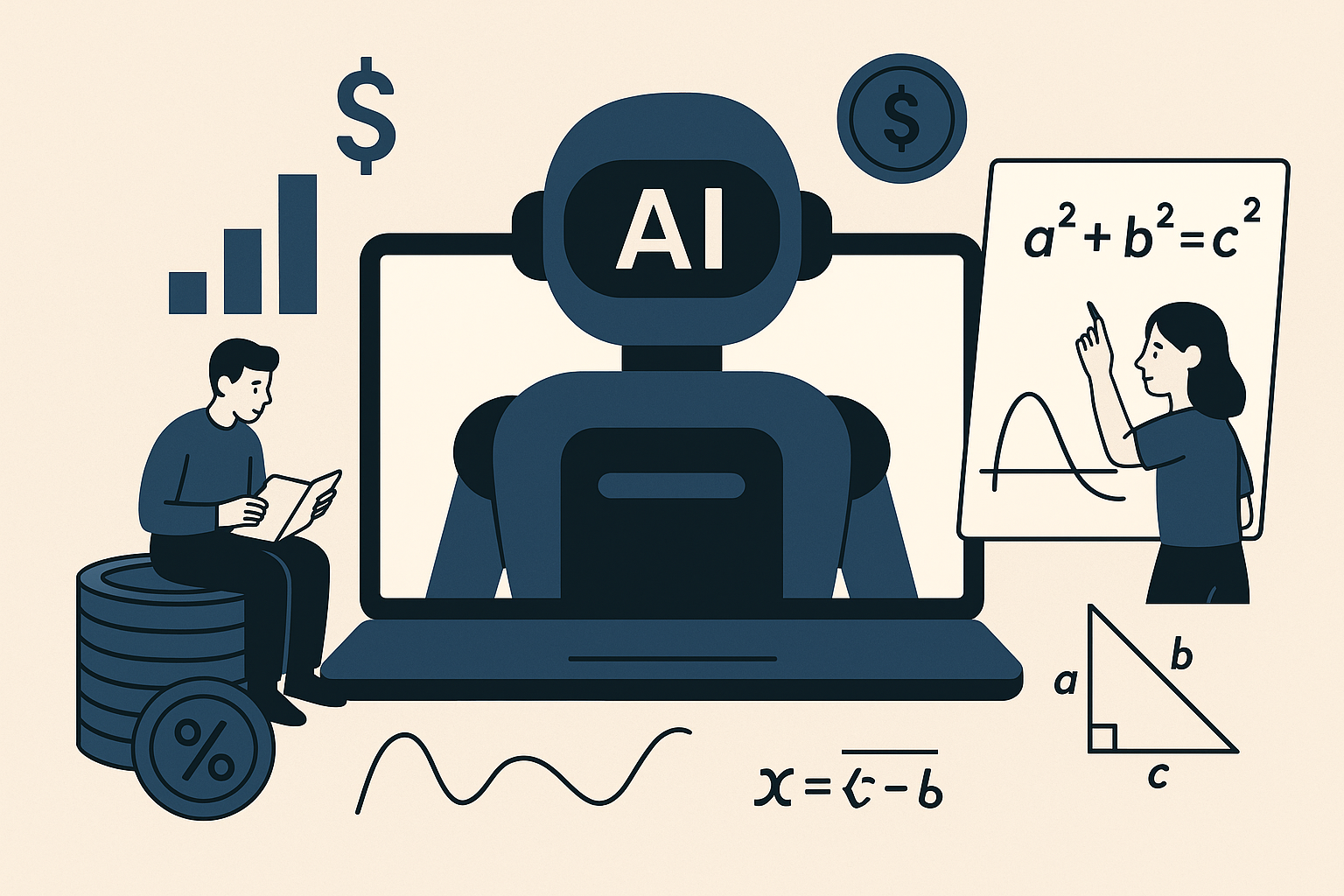
One of the most immediate benefits of AI in mathematics education is the ability to provide personalized learning. Platforms like Khan Academy, a popular educational non-profit, have begun integrating AI tutors to adapt lessons to each student’s needs. When a student struggles with fractions or algebra, these AI systems can identify misunderstandings and offer targeted hints or step-by-step guidance. This means that learners receive immediate feedback and support, much like having a patient tutor always ready to help. Such personalized approaches can be particularly valuable in the United States, where mathematics instruction varies by state and district, leading to gaps in foundational understanding.
Beyond the classroom, AI has practical applications in daily decision-making — especially when it comes to money. Modern budgeting apps, for example, use AI to help users categorize spending, identify saving opportunities, and even forecast future expenses based on mathematical models. For students, this real-world connection between math concepts and their finances brings learning to life. Instead of only working on abstract word problems, learners can see how calculating percentages and analyzing data can help them decide how much to spend or save. This not only boosts engagement but also builds essential life skills.
AI is also being leveraged to address broader educational challenges. Notably, investors such as Alex Gerko have supported extracurricular math clubs and digital tutoring initiatives aimed at providing more equitable access to high-quality math instruction. AI-driven platforms developed by companies like Squirrel AI and initiatives fostered through public non-profits are making advanced educational resources available beyond the traditional classroom setting. This is especially important in countries like the United States, where access to advanced math programs can depend on ZIP code or school funding.
Mathematics and AI are intertwined on a deeper level, too. Mathematical optimization, probability, and logic are foundational for many AI systems. In this sense, when students engage with AI-based math tools, they’re using technology that itself relies on math principles. This creates opportunities to discuss with learners how algorithms sort information or make decisions, reinforcing the idea that mathematical reasoning is both practical and relevant to the modern world.
Critics sometimes argue that heavy use of AI may reduce essential problem-solving skills, but many educators and researchers counter that these systems can help students focus their efforts where it matters most. Rather than spending excessive time on rote calculation, learners can practice applying math to more meaningful, complex problems—such as comparing interest rates on loans or analyzing the risk-reward balance in a budgeting scenario.
As AI technology continues to advance, it is likely to play an even greater role in mathematics education—helping students not just to memorize formulas but to understand how mathematical thinking can be applied to real situations, particularly those involving money and logical decision-making. This shift has the potential to make mathematics education more practical, accessible, and engaging for people everywhere.