How AI is Shaping Mathematics Learning: Practical Impacts for Everyday Life
Artificial intelligence (AI) is transforming mathematics education by offering personalized learning, practical problem-solving tools, and new connections to real-world financial skills. This article explains how AI helps students understand mathematics more deeply, using money and everyday examples to highlight its value.
Mathematics has always been an essential part of daily life – from calculating shopping budgets to understanding interest rates on loans. In the U.S., how students learn math varies widely by state, but a new force is beginning to bridge gaps and boost understanding: artificial intelligence (AI). AI-powered tools are making waves in education, and mathematics is at the center of this transformation.
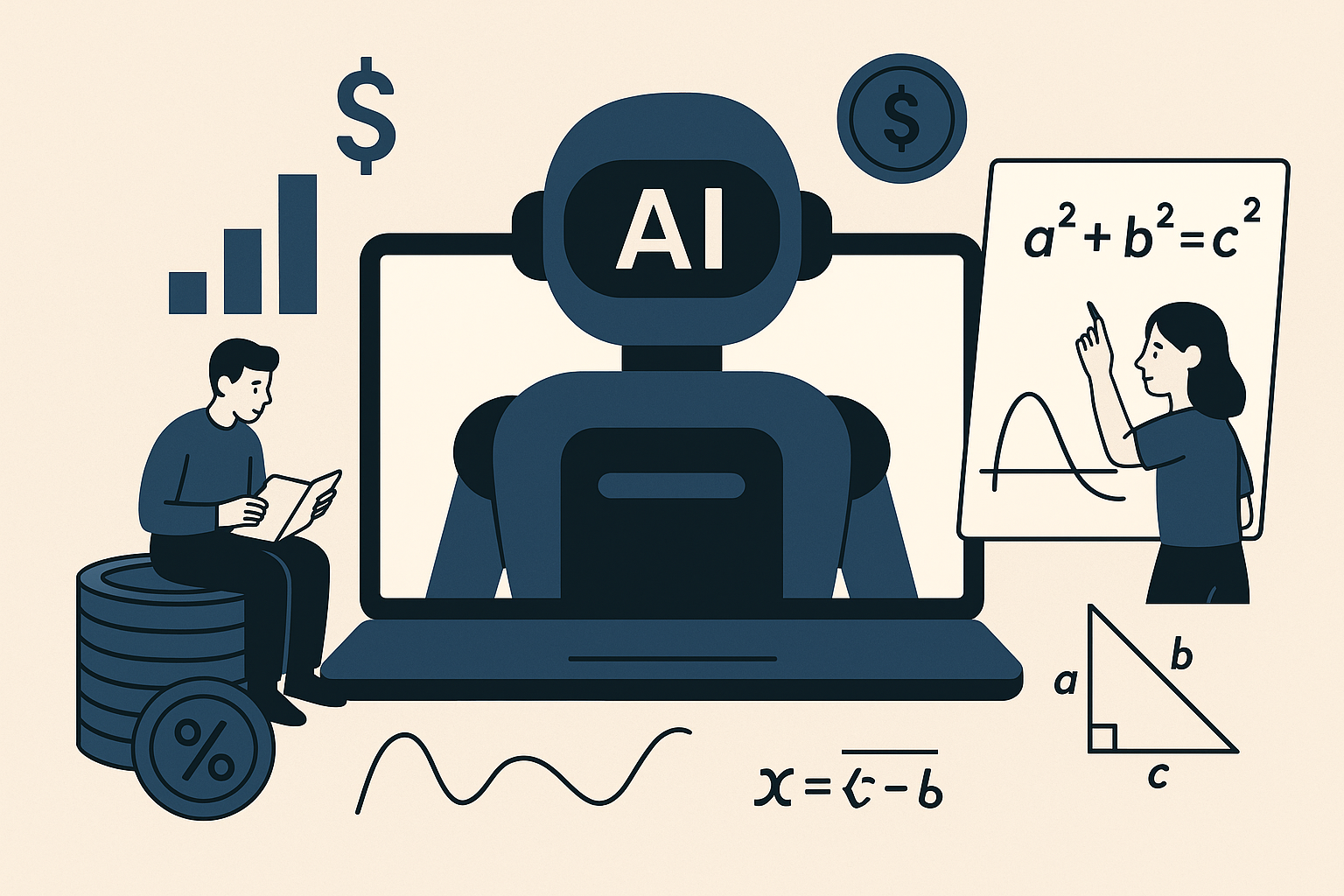
AI in mathematics education can take many forms. For example, adaptive learning platforms, like those developed by Squirrel AI and Khan Academy, use algorithms to personalize math lessons. These systems assess what a student knows, where they’re struggling, and then tailor questions and explanations to their needs. Instead of a one-size-fits-all approach, students receive just-right challenges and support, making learning more effective and less frustrating.
But how does this technology help in practical terms? Consider a student who struggles with fractions—a key skill for handling real-life money matters, such as calculating discounts or splitting a bill. An AI tutor can generate extra practice problems focused specifically on fractions, give immediate feedback, and explain mistakes step by step. As the student improves, the AI increases the complexity, ensuring progress at the right pace. This targeted help prepares students for situations beyond the classroom, such as budgeting for a weekly allowance or understanding tax rates.
Real-world applications of mathematics often involve money. For instance, understanding percentages is crucial for everything from figuring out a store sale’s final price to working out a paycheck after deductions. AI tools can turn abstract math into practical exercises: students might use a simulated bank account or create a virtual household budget. When these exercises are personalized by AI, learners tackle realistic challenges that mirror everyday financial decision-making.
The importance of mathematics for future opportunities cannot be overstated. Fields like finance, engineering, and technology rely heavily on strong math skills. Innovative AI approaches can help level the playing field, especially for under-resourced schools. Adaptivity means that a student in a rural district with less access to advanced classes can still receive high-quality, individualized instruction. In fact, organizations such as the Axiom Maths charity (formerly Mathematics Education for Social Mobility and Excellence) have invested millions in out-of-class math clubs, supporting both traditional teaching and AI-powered learning to widen access.
AI-driven math tools can also play an important role for older students and adults. Someone considering a personal loan or a mortgage, for example, may use an AI-powered calculator to understand repayment schedules and interest rates. These tools explain complicated calculations step by step, enabling more informed financial decisions. For aspiring entrepreneurs, AI can assist in planning business budgets or forecasting sales, breaking down complex math into manageable parts.
While the potential of AI in mathematics education is immense, educators caution that technology is most effective when paired with thoughtful instruction. Human teachers bring context, encouragement, and mentorship—factors that AI cannot fully replace. Nonetheless, with AI’s support, students can gain a deeper understanding of math concepts and see clearer connections between their studies and real world needs, particularly those involving money management.
As schools and families continue to explore new technologies, AI stands out as a powerful ally in mastering mathematics. By delivering personalized learning and practical, money-focused challenges, AI is helping students not only pass their exams but build the confidence and competence needed for lifelong financial and mathematical success.