Understanding Money Laundering: Meaning, Methods, and Why it Matters
Money laundering is a criminal process that turns illegal proceeds into seemingly legitimate assets. This article explains what money laundering means, why it is a problem, its real-life financial impact, and how math and money management play a role in understanding and combating this crime.
Money laundering is a term often heard in news reports about crime and finance. But what exactly does it mean, and why is it so important to society and individuals? Simply put, money laundering is the process of taking money gained from illegal activities—such as drug trafficking, corruption, or fraud—and disguising it so that it appears to come from legitimate sources. This makes it difficult for authorities to trace the original criminal act and hold wrongdoers accountable.
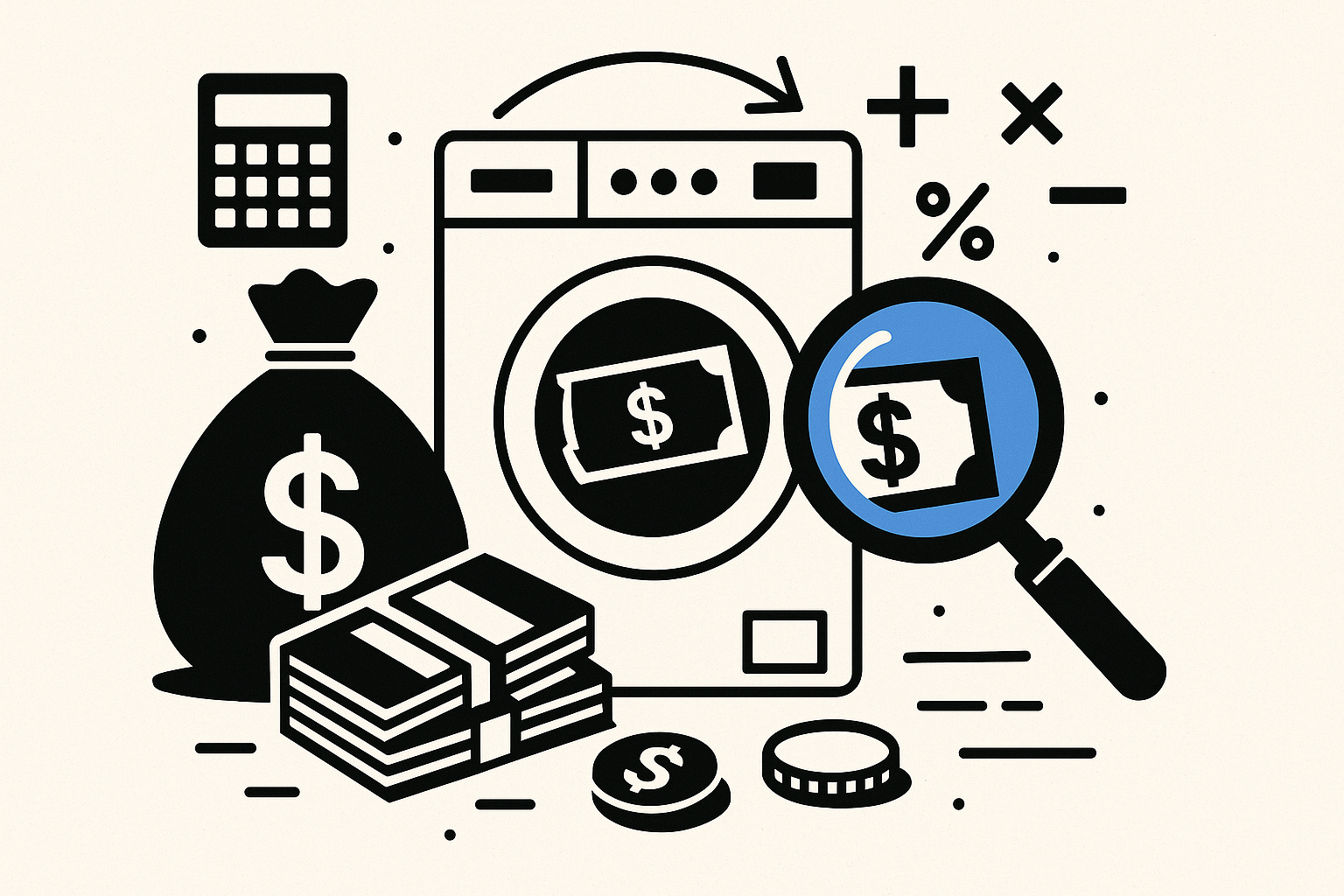
Why is it called 'laundering'? The term comes from the idea of 'cleaning' dirty money. The proceeds of crime are considered 'dirty' because their origin is illegal; by putting the money through various financial transactions, criminals try to make it look 'clean' or legal. It's like washing muddy water until it appears clear, even though its original source remains the same.
The process usually happens in three main stages, each involving different practical uses of mathematics and financial knowledge. The first stage is called 'placement,' where illegal money is introduced into the legitimate financial system. This might involve breaking up large amounts of cash into smaller, less suspicious deposits—a strategy based on calculations about what will avoid raising red flags at banks.
Next comes 'layering,' which involves moving the money around through a series of complex transactions. This could include wiring money to different countries, making investments, or purchasing valuable items like art or real estate. Here is where understanding percentages, exchange rates, and transaction fees becomes crucial. For example, a money launderer might calculate the best way to move $10,000 through four different banks in different countries so that it’s hard to trace. They rely on mathematics to manage currency conversion, split amounts, and hide suspicious patterns.
The third and final stage is 'integration.' At this point, the money appears to come from a legitimate source. Criminals might invest the laundered funds in businesses, property, or financial markets. By this stage, tracing the origin back to an illegal activity is very difficult without careful forensic accounting—which again relies on mathematical analysis.
Real-world examples underline the importance of strong anti-money laundering efforts. For instance, international cities with large financial centers, like London, have been cited as hubs where complex laundering can occur. Sometimes even respected institutions, like banks or lottery operators, can be unwittingly involved if safeguards are not strong enough. Governments and central banks continuously update regulations and supervision to prevent financial markets from being exploited in this way.
Money laundering can have damaging effects on society. It allows criminals to benefit from their illegal actions, often fueling more crime and corruption. It also threatens the integrity of financial markets, undermines legitimate businesses, and can distort real estate prices in places with high levels of illicit funds entering the economy.
From a practical perspective, understanding money laundering involves both finance and mathematics. Spotting suspicious patterns requires looking at numbers—like unusual cash flows, unusually timed transactions, or strange accounting methods. That is why banks and financial professionals now use special software and training to detect irregularities based on mathematical models.
Anti-money laundering (AML) policies are enforced worldwide, and individuals working in finance are expected to know the basics. Even ordinary people may encounter questions about large deposits or transfers, as banks are required by law to ask about the source of certain funds. If a lottery winner, for instance, tries to hide their prize or split it in ways that don’t make sense mathematically, it could raise suspicions of money laundering.
In summary, money laundering is a real-world financial crime with critical links to mathematics, practical money management, and everyday banking. Understanding how it works helps everyone—from professionals to citizens—recognize its dangers and be part of a society that values transparent and legal financial activity.