Understanding Money Laundering: What It Is and Why It Matters
Money laundering is a crucial concept in the fight against crime. It’s the method by which money earned from illegal activities is made to appear legitimate. This article explores what money laundering means, how it happens, and why everyone should understand its financial and mathematical implications.
Money laundering is a term that often comes up in news stories about crime and finance, but what does it really mean? At its core, money laundering is the process of taking money obtained from illegal activities—such as drug trafficking, corruption, or fraud—and making it appear as though it comes from a legal source. This is a critical issue in anti-crime efforts worldwide, as it allows criminals to enjoy and use their money without raising suspicion.
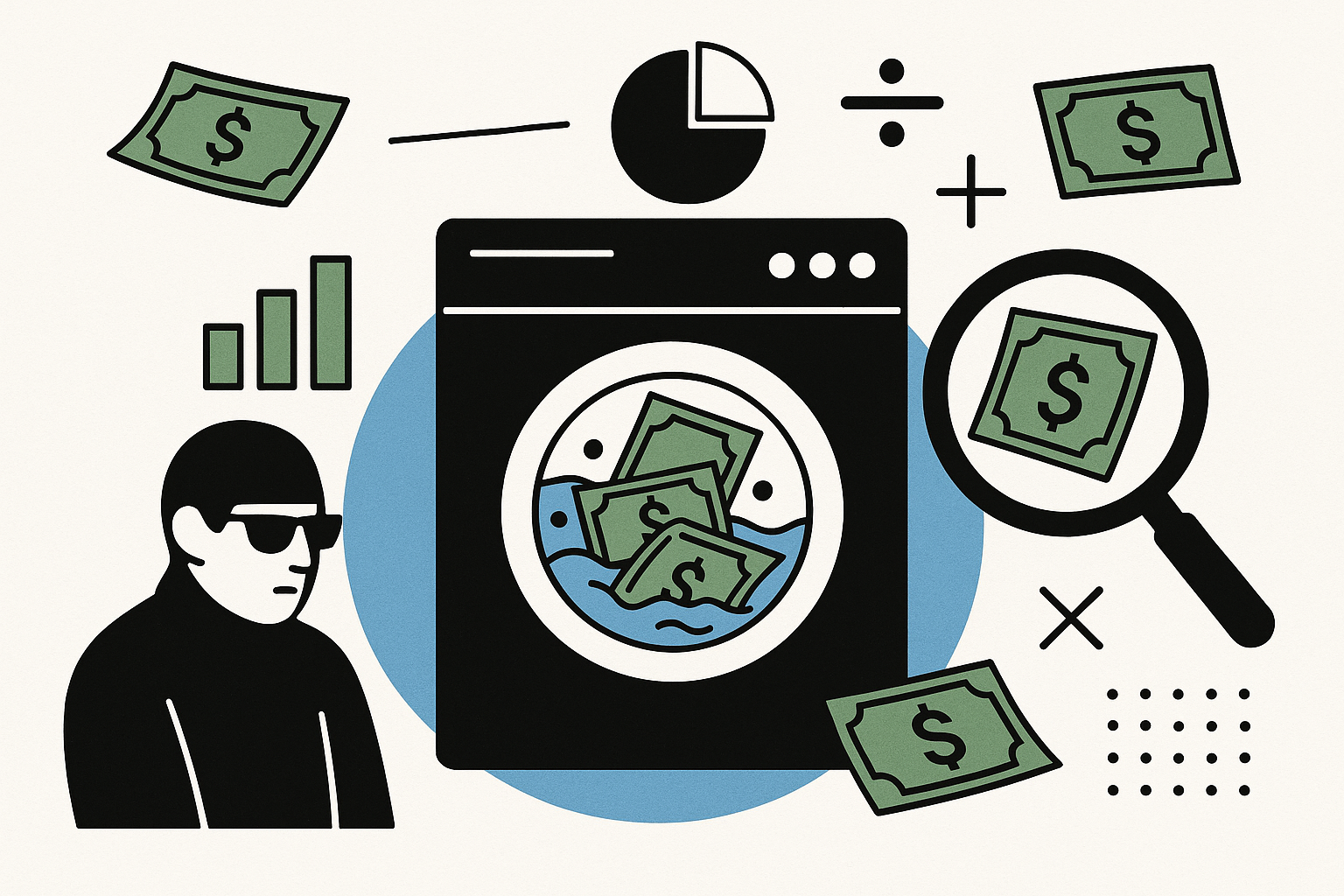
To further clarify, let's break down the term itself. 'Money' refers to currency or assets, which can be anything from cash to property to stocks. 'Laundering' is a metaphor for 'cleaning' the money—removing the stains of illegality so that it can circulate freely in the economy. Just like dirty clothes are washed to look clean, illegally obtained money is disguised to look legitimate.
The process of money laundering typically happens in three stages: placement, layering, and integration. Imagine a criminal has a suitcase full of illegally earned cash. At the placement stage, they try to put that money into the financial system. This might mean depositing it in small amounts into banks, buying valuable items, or using it to buy lottery tickets. The key is not to attract attention by placing too much money at once.
The second step is layering. Here, the aim is to separate the money from its criminal origins by moving it through a series of complex transactions. This often includes transferring money across accounts, currencies, or even international borders. For example, the funds might be transferred from account to account, bought and sold as stocks, or converted into different assets. Mathematically, each transaction reduces the likelihood that the money’s original source can be easily traced—a bit like creating a complicated maze.
Finally, there's integration. By this stage, the money has been laundered enough that it can be reintroduced into the economy as if it were normal income. It might be invested in a business, used to buy property, or spent in ways that seem ordinary. At this point, it is difficult for law enforcement to distinguish this money from any other legal funds.
Understanding money laundering also involves real-world mathematics, especially for banks and regulators whose job is to spot suspicious activities. For instance, a person who suddenly makes frequent deposits just under a reporting threshold—like $9,900 instead of $10,000 in the U.S., where banks must report transactions over $10,000—may be trying to evade detection using a technique called structuring. Detecting patterns in such financial transactions involves mathematical tools and software that analyze thousands or millions of monetary movements, seeking anomalies.
Money laundering has a significant impact on the economy. Illegitimate funds can distort real estate prices, create unfair competition, and even destabilize financial markets. When dirty money is laundered successfully, it undermines the integrity of the financial system and can make it more difficult for honest businesses to compete fairly. Moreover, these activities often fuel further criminal actions, creating a cycle that harms society as a whole.
Governments, banks, and international organizations are constantly developing new methods to combat money laundering. This includes anti-money laundering (AML) laws, reporting requirements, and specialized financial surveillance. Education also plays a key role. By understanding how money laundering works and its connection to everyday financial transactions, individuals and businesses can help identify and prevent illegal financial activity.
In conclusion, money laundering isn't just a problem for law enforcement or bankers—it's an issue that affects everyone. By learning to recognize the signs, understanding the mathematics behind transactions, and supporting robust regulatory systems, we can all take part in reducing crime and building a fairer economy.