Unmasking Money Laundering: What It Means and Why It Matters
Money laundering is a complex process where illegal funds are disguised as legitimate assets. This article explores the basics of money laundering, connects it to real-world financial practices and mathematics, and explains why understanding this crime is essential for everyone in today’s interconnected economy.
Money laundering is a term that often appears in headlines, financial news, and court cases. But what does it really mean? Simply put, money laundering is the process of transforming money obtained from criminal activities into funds that appear legal. This crime sits at the intersection of finance, crime, and law enforcement, affecting economies all over the world.
Imagine you have cash earned from illegal acts, such as selling drugs or committing fraud. You cannot simply deposit this cash into a bank account without raising suspicion. To use this money without getting caught, people involved in crime need to make it look like their income is from a legitimate source. That’s where money laundering comes in.
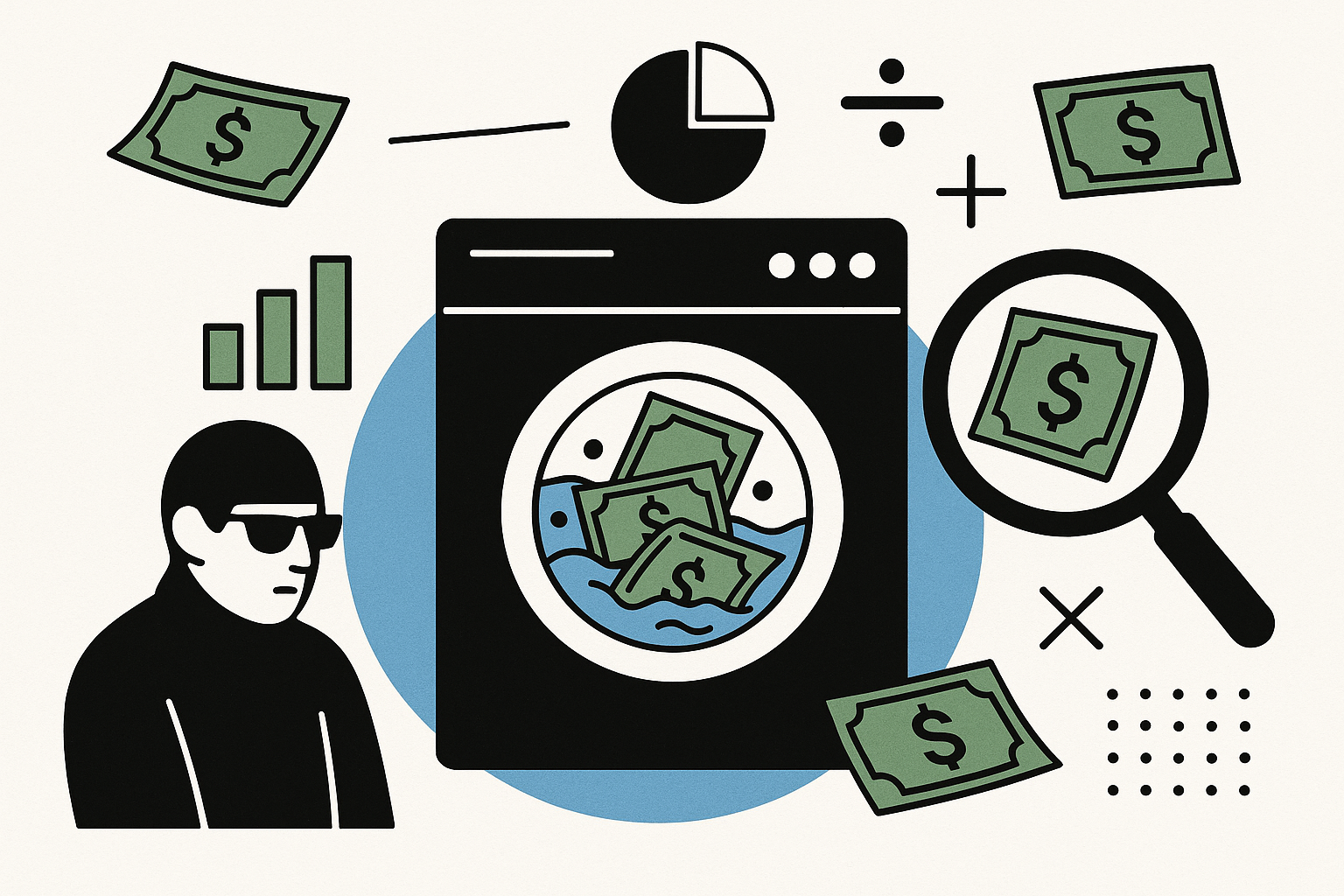
The process of money laundering typically involves three stages: placement, layering, and integration. First, the 'placement' stage is when illicit funds are introduced into the financial system. This might involve depositing small amounts of cash into banks or using the money to purchase valuable items like cars or jewelry. Next is 'layering,' where launderers move the money through a complex series of bank transfers, shell companies, or international transactions to hide the origin of the funds. Finally, 'integration' occurs when the cleaned money re-enters the economy, for example, when it is used to buy real estate or invest in businesses. At this point, it appears to come from legitimate sources.
Money laundering is not just a concern for law enforcement. It has far-reaching consequences that impact society and the economy. When criminal proceeds are mixed with legitimate financial activity, it can distort markets, encourage further crime, and even affect the value and stability of national currencies. For example, large flows of illicit funds through real estate or the stock market can push prices higher, hurting ordinary consumers and investors.
Understanding money laundering often involves looking at the mathematics of money movement. Financial investigators use data analysis and mathematical methods to spot unusual patterns. For instance, unusually large cash deposits that fall just below reporting thresholds may indicate someone is trying to 'structure' transactions to avoid attention. Mathematical models can flag activity which does not add up, such as someone living beyond their reported means or moving funds between accounts in unusual ways. These real-world mathematics skills help financial institutions and authorities spot potential risks and prevent illegal activity.
Money laundering matters because it undermines the integrity of the financial system. It allows criminals to profit from their crimes and can even fund other illegal ventures, such as terrorism or corruption. Central banks, governments, and international organizations like the Financial Action Task Force (FATF) have created regulations and guidelines that require banks and businesses to check where their customers' money comes from and report suspicious transactions.
For individuals, learning about money laundering encourages critical thinking about money, ethics, and the safeguards that make financial systems trustworthy. It also demonstrates the value of mathematics and logical reasoning in solving real-world challenges. Financial literacy programs and even classroom exercises on money can help students understand how and why following the rules protects them and their communities.
In today’s digital economy, where money can move instantly across borders and through virtual currencies, money laundering techniques are evolving. This makes it all the more important for everyone—from students to professionals—to recognize red flags and understand the basics of this crime. By knowing how money laundering works, we can all play a part in supporting safer and fairer financial systems.