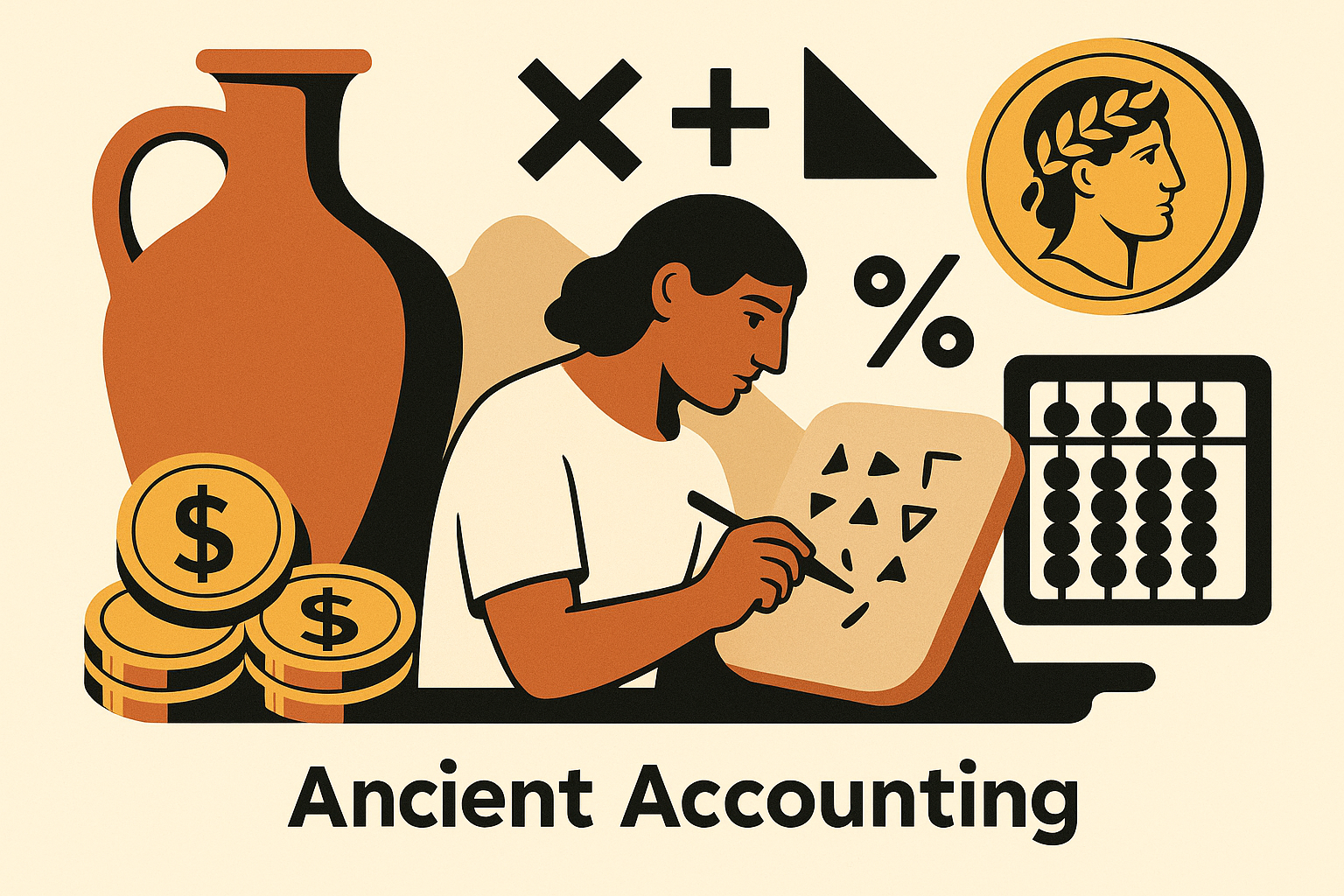
Ancient Accounting: The Birth of Numbers, Money, and Record-Keeping
Modern money management and business practices have deep roots in the ancient past. The story of accounting is one of practical problem-solving, dating back thousands of years to early civilizations like Mesopotamia, Egypt, and Rome. This article explores how ancient peoples invented the first systems for tracking economic activity, creating tools and concepts still relevant in today’s world of finance and mathematics.
When most people think about accounting, spreadsheets and tax season may come to mind. Yet the origins of accounting are as old as civilization itself, deeply entwined with the rise of money, mathematics, and economic organization. In ancient times, the need to count and track resources was central to survival—and to the growth of societies.
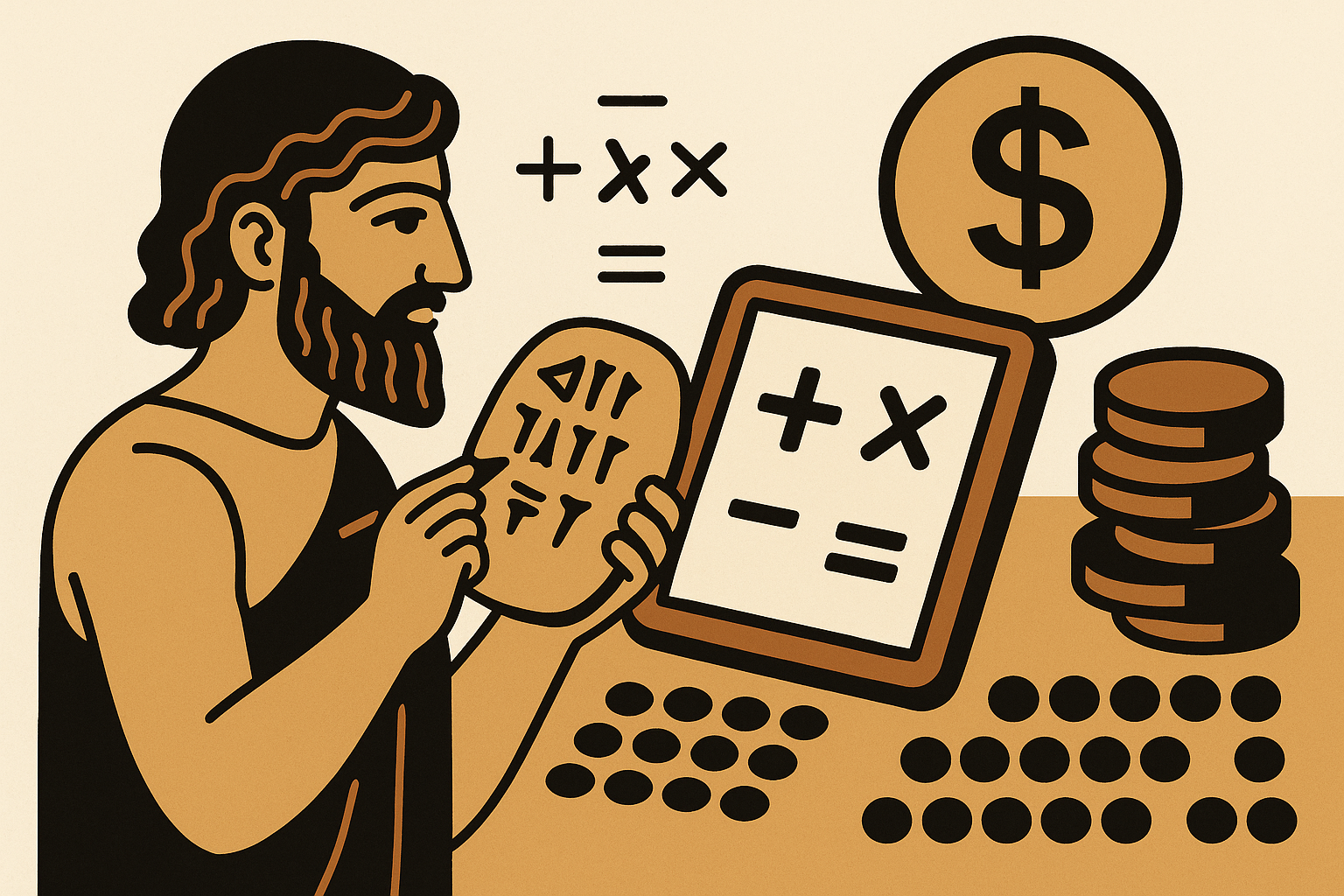
The earliest records of accounting date back over 7,000 years to ancient Mesopotamia. Here, in what is now modern-day Iraq, people used clay tablets to record the ownership and exchange of commodities like grain, livestock, and silver. At first, these clay tablets had simple symbols, but over time, they evolved into the world’s first written numbers and records. This was not just an exercise in mathematics for its own sake. The practicality was clear: marketplaces, temples, and governments needed to know how much was owed, owned, or exchanged.
This early form of accounting played a crucial role in the development of money itself. Money functions as a unit of account, allowing people to assign value to goods, compare prices, and record transactions in measurable — and often transferable — terms. In practical terms, an ancient merchant could use accounting to ensure that a shipment of barley matched the amount paid in silver, keeping all parties honest and supporting smooth commerce.
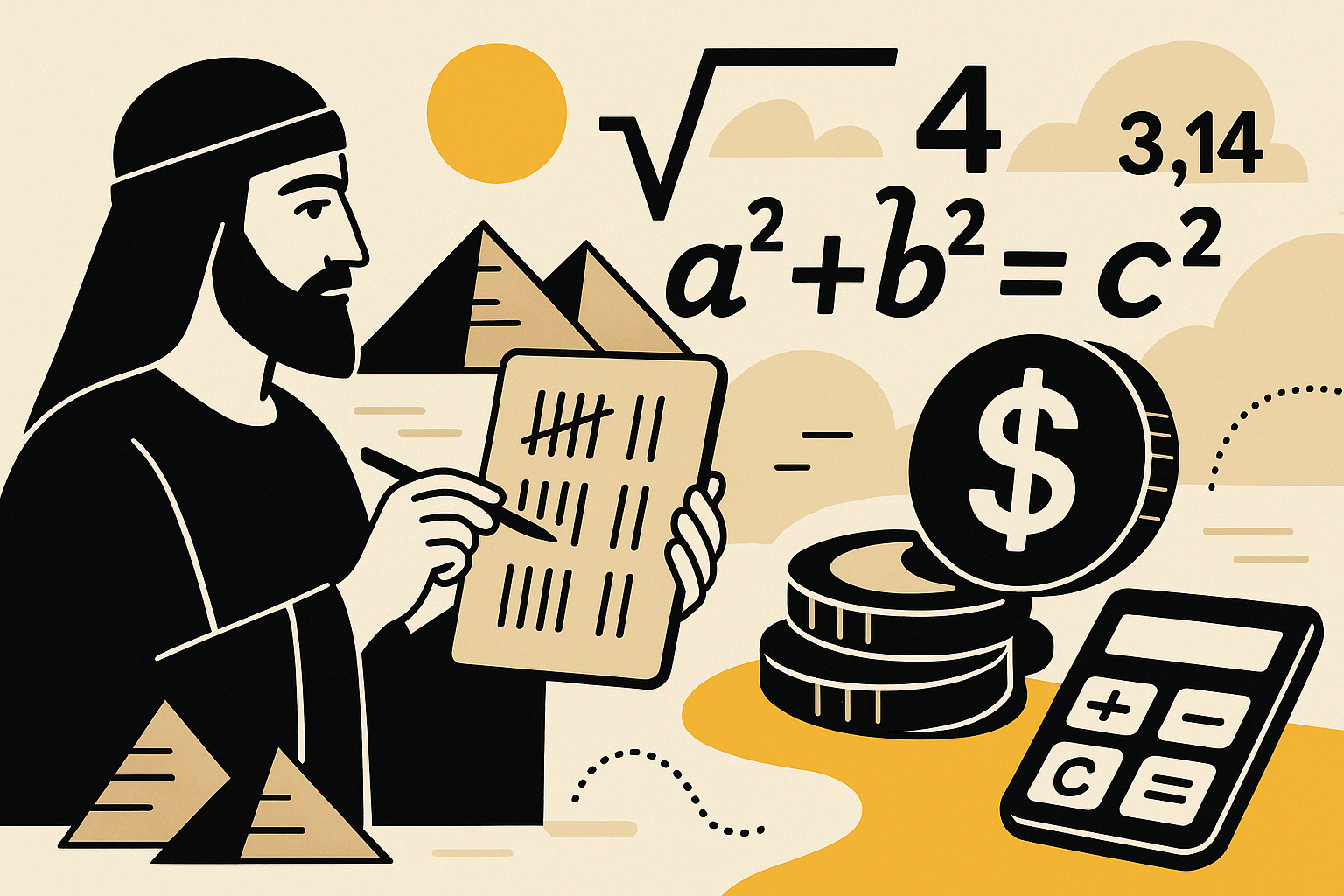
As societies grew, so did the complexity of their economies. Ancient Egypt’s scribes maintained detailed accounts of harvests, workers’ payments, and temple income on papyrus. In Rome, the government kept public accounts—called 'rationes'—to track expenditures for major works and military campaigns. These records enabled rulers to plan, tax effectively, and hold officials accountable. Even then, the connection between reliable record-keeping and good governance was clear.
At its core, ancient accounting was about more than numbers; it was about trust and transparency. By keeping written records, communities could resolve disputes and prevent fraud. These records, which have survived thousands of years, tell us how ancient economies functioned and remind us that the basics of accounting—organization, fairness, and clarity—are timeless.
Ancient accounting also highlights the early use of mathematics in real-world situations. Concepts like addition, subtraction, and multiplication were first used to measure goods and calculate values. This practical application laid the foundation for more advanced mathematical thinking and, eventually, for the development of mathematical finance, which uses models to forecast and manage risk in today’s markets.
For students and adults alike, understanding ancient accounting can make modern financial and mathematical topics feel more concrete. The next time you balance a budget, compare prices, or use a spreadsheet, you’re participating in a practice with origins stretching back to clay tablets and papyrus scrolls. By seeing accounting as both a historical tool and a living skill, we gain insight into the enduring relationship between numbers, money, and society.