Ancient Accounting: The Origins of Money, Mathematics, and Record-Keeping
Explore how ancient accounting systems shaped the development of money management, mathematics, and education. Learn how early civilizations used creative tools and methods to keep track of wealth and resources—skills that remain vital in the modern world.
Accounting, or the practice of tracking financial transactions, is often seen as a modern profession filled with spreadsheets, computers, and formal audits. However, its roots reach deep into the past—stretching all the way to ancient civilizations that laid the foundations for how we handle money and management today. Understanding ancient accounting systems offers practical insights into the origins of money, mathematics, and even education.
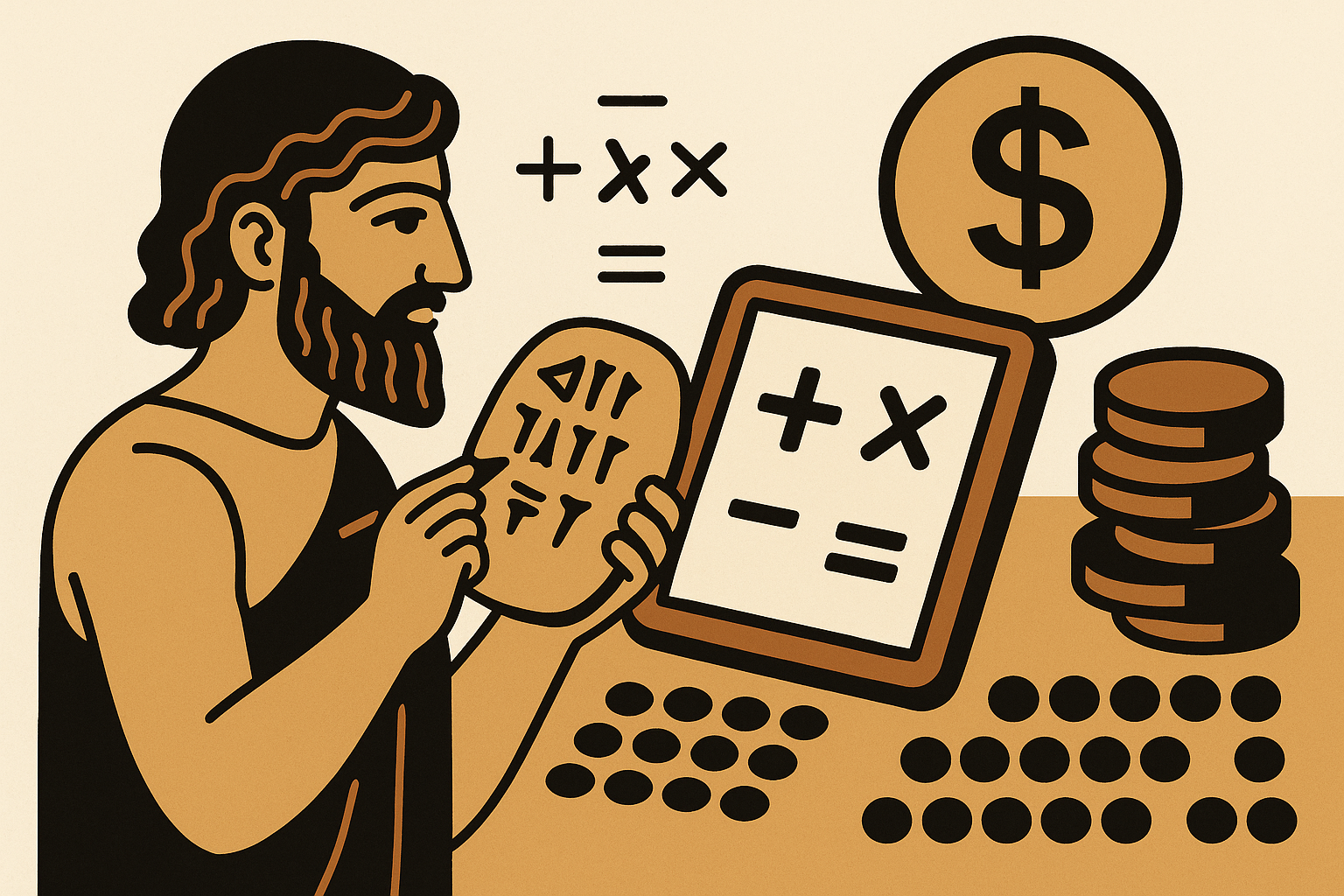
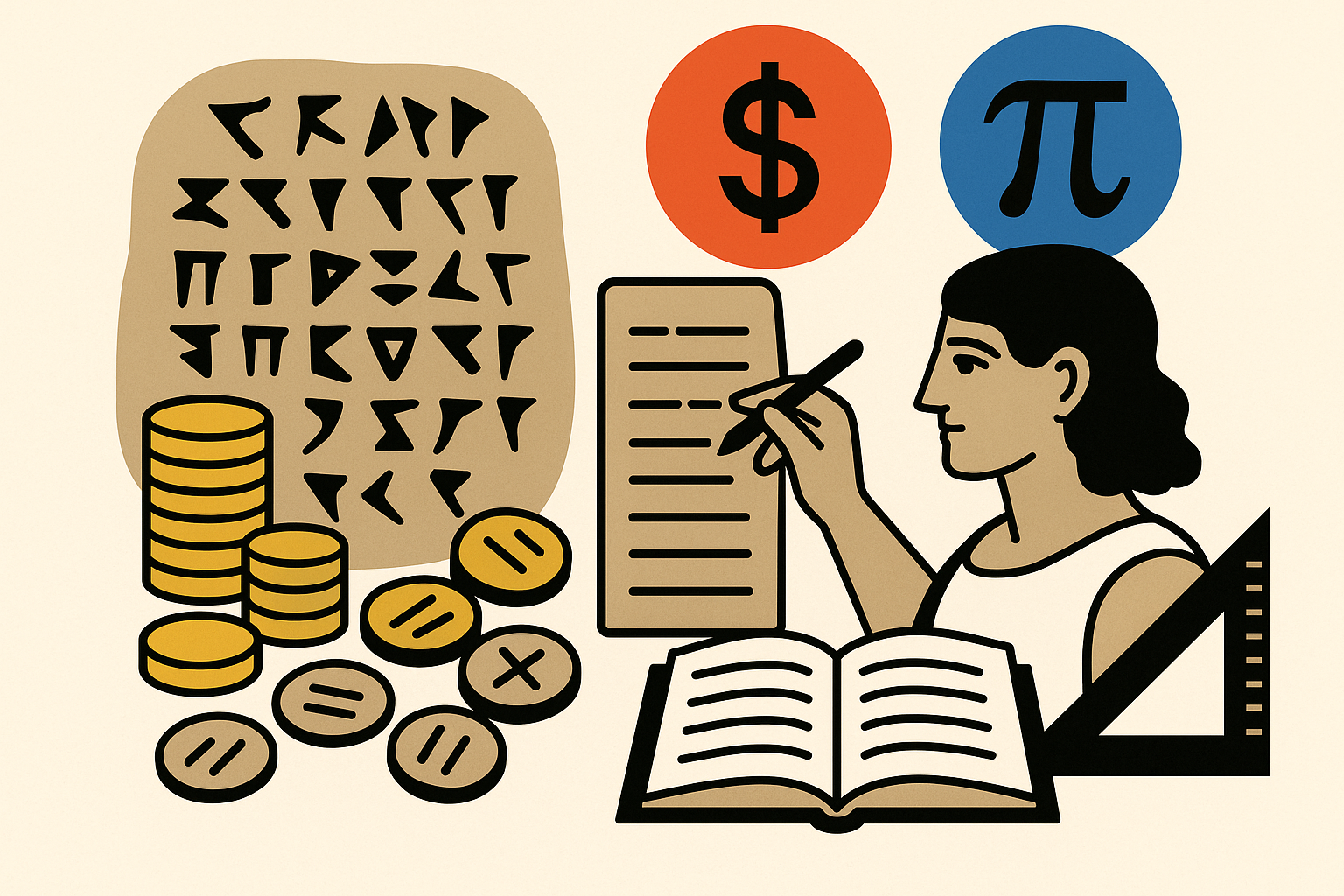
The earliest known records of accounting date back over 7,000 years to the civilizations of ancient Mesopotamia (modern-day Iraq). Archaeologists have uncovered clay tablets covered with cuneiform writing and various tally marks. These were not random scribbles: they systematically recorded the movement of goods such as livestock, grain, and silver. In a society where trade and agriculture were central to survival, being able to count, measure, and record was essential. These early records helped people keep track of debts owed, taxes paid, and inventories of resources.
These accounting practices went hand-in-hand with the development of mathematics. To keep accurate records, ancient accountants needed to perform basic arithmetic such as addition, subtraction, and multiplication. Over time, this need spurred the advancement of number systems and writing—some of humanity’s most significant achievements. For example, Mesopotamian scribes largely used a base-60 (sexagesimal) system, which is why we still have 60 minutes in an hour and 360 degrees in a circle. Accounting, therefore, played a crucial role in the spread of mathematical knowledge throughout society.
Units of account are another concept that emerged from ancient accounting. Today, we take for granted that money, like dollars or euros, provides a standard measure for valuing goods and services. But before coins and bills, people needed a way to quantify wealth and debt consistently. In ancient Mesopotamia, silver was often used as a unit of account. Goods were measured in terms of how much silver they were worth, even if physical silver did not actually change hands. This abstraction made trade and contracts more efficient, since farmers and merchants now had a common standard for comparing very different products or services.
Education and the organization of knowledge were also influenced by these early economic needs. Training to become a scribe in ancient Egypt, Mesopotamia, or later in Greece and Rome, involved learning arithmetic, record-keeping, and the management of accounts. These skills were foundational for government officials, priests, and merchants. The curriculum in certain ancient schools even included practical exercises such as managing inventories, planning harvests, and tracking temple donations, showing how deeply intertwined accounting was with daily life and formal education.
Real-world financial literacy remains as important today as in ancient times. Whether it is tracking personal expenses, running a small business, or managing national budgets, the basic skills of accounting—recording transactions, measuring value, and performing calculations—are vital. Many economic systems around the world, including tax structures and modern banking, still rely on concepts established thousands of years ago.
The story of ancient accounting is far more than a tale of dusty ledgers. It is a testament to human ingenuity and problem-solving. From humble tally marks on clay tablets to the sophisticated financial systems of today, accounting has always been about making sense of the world through numbers—a lesson as relevant now as it was in the temples and markets of the ancient world.