Ancient Accounting: The Roots of Mathematics and Money Management
Long before calculators or digital spreadsheets, ancient civilizations developed ways to track resources, calculate values, and manage early money systems. Exploring the practical origins of accounting helps us understand both history and the enduring power of mathematics in daily life.
Accounting, the systematized way of recording, summarizing, and analyzing financial information, has its origins deep in the ancient past. In early societies, accounting was a practical tool for survival, trade, and administration, and its evolution highlights the importance of mathematics in managing resources and shaping economies.
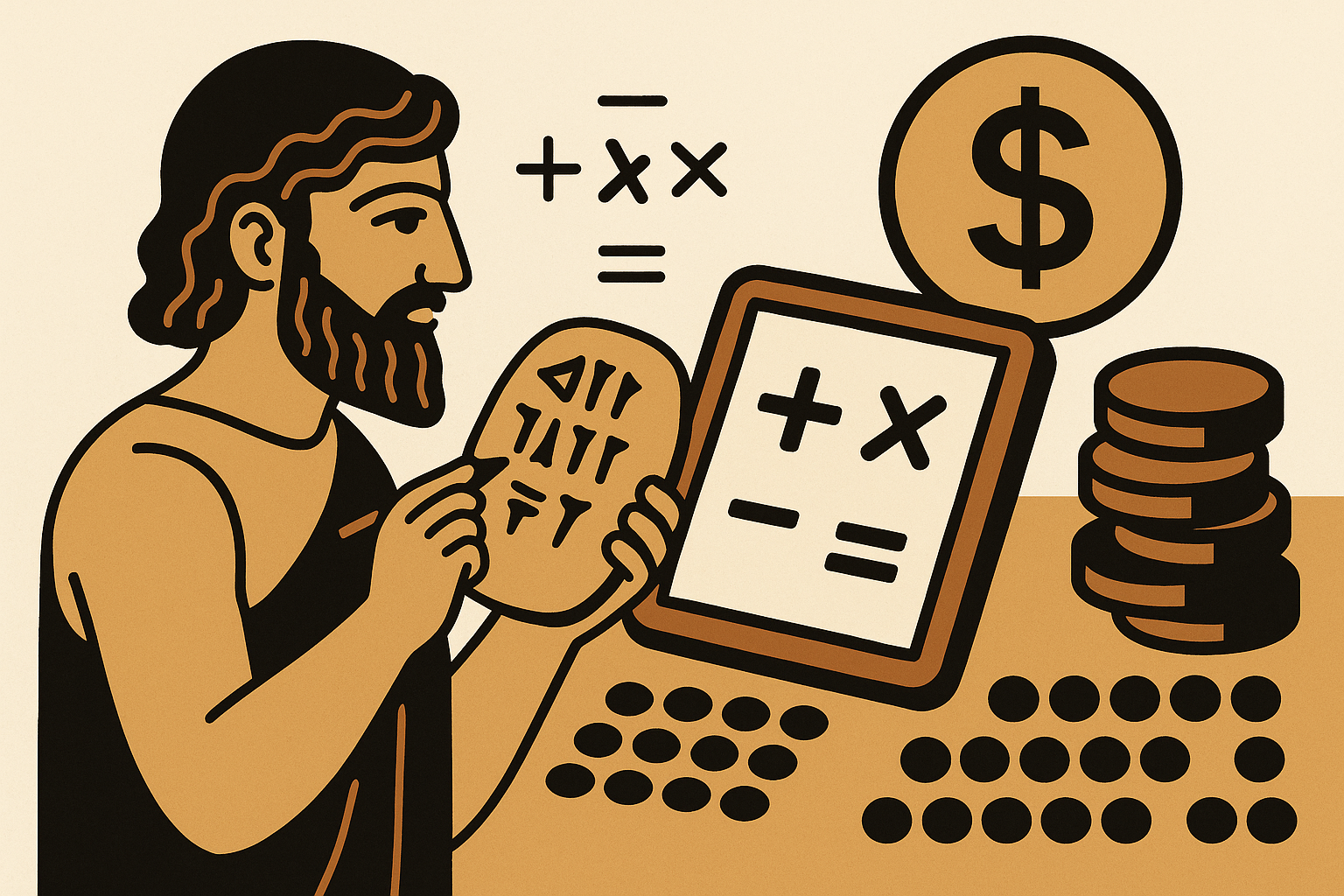
The earliest known records of accounting come from ancient Mesopotamia, dating back more than 7,000 years. Archaeologists have discovered clay tablets inscribed with cuneiform script, used by temple officials and merchants in the region that is now Iraq. These records tracked goods such as grain, livestock, and silver—items that were vital for commerce and governance. Accurate counting and recordkeeping allowed these ancient societies to allocate resources efficiently and collect taxes, forming the backbone of early government and trade.
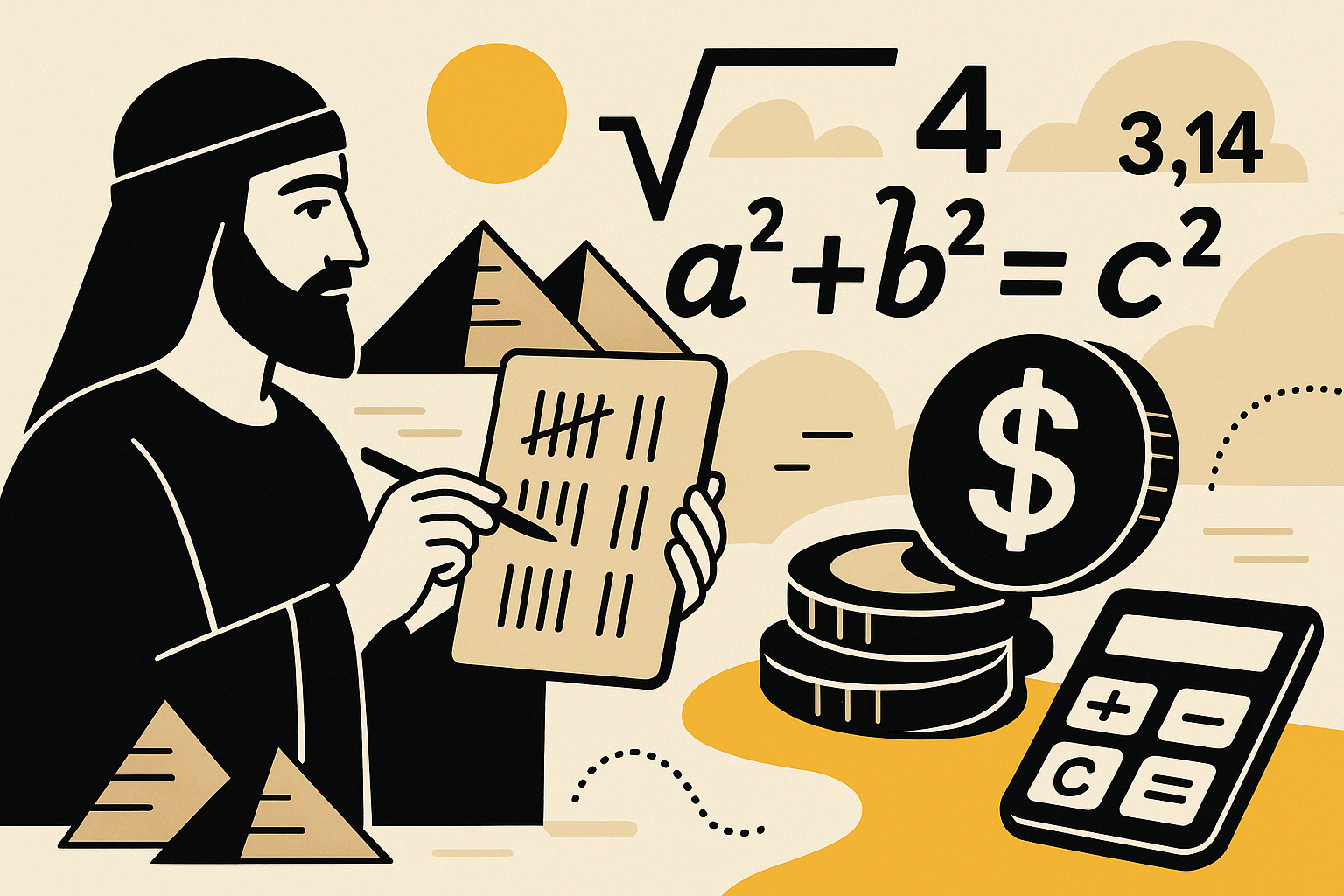
Similar developments occurred in ancient Egypt, where scribes meticulously recorded the yield of crops, the distribution of food, and other assets. This was essential in a land where the Nile’s annual flooding made agricultural planning and control crucial for survival. Some of our earliest mathematical texts, such as the Rhind Mathematical Papyrus, show how the Egyptians solved practical problems using arithmetic and geometry—vital skills for both construction projects and economic management. The Egyptians’ use of hieroglyphs for numbers illustrates an early understanding of measurement, an important principle in today’s financial accounting.
Ancient accounting systems were closely connected to the emergence of money. Early units of account—such as shekels, bushels, or talents—served not only as measures of weight or volume but also as references for value in trade and tax collection. As commercial activity grew, the need for reliable ways to compare and exchange goods led to the development of monetary systems. Ancient accountants essentially invented the first bookkeeping practices, establishing records that formed the basis for understanding assets, debts, and profits.
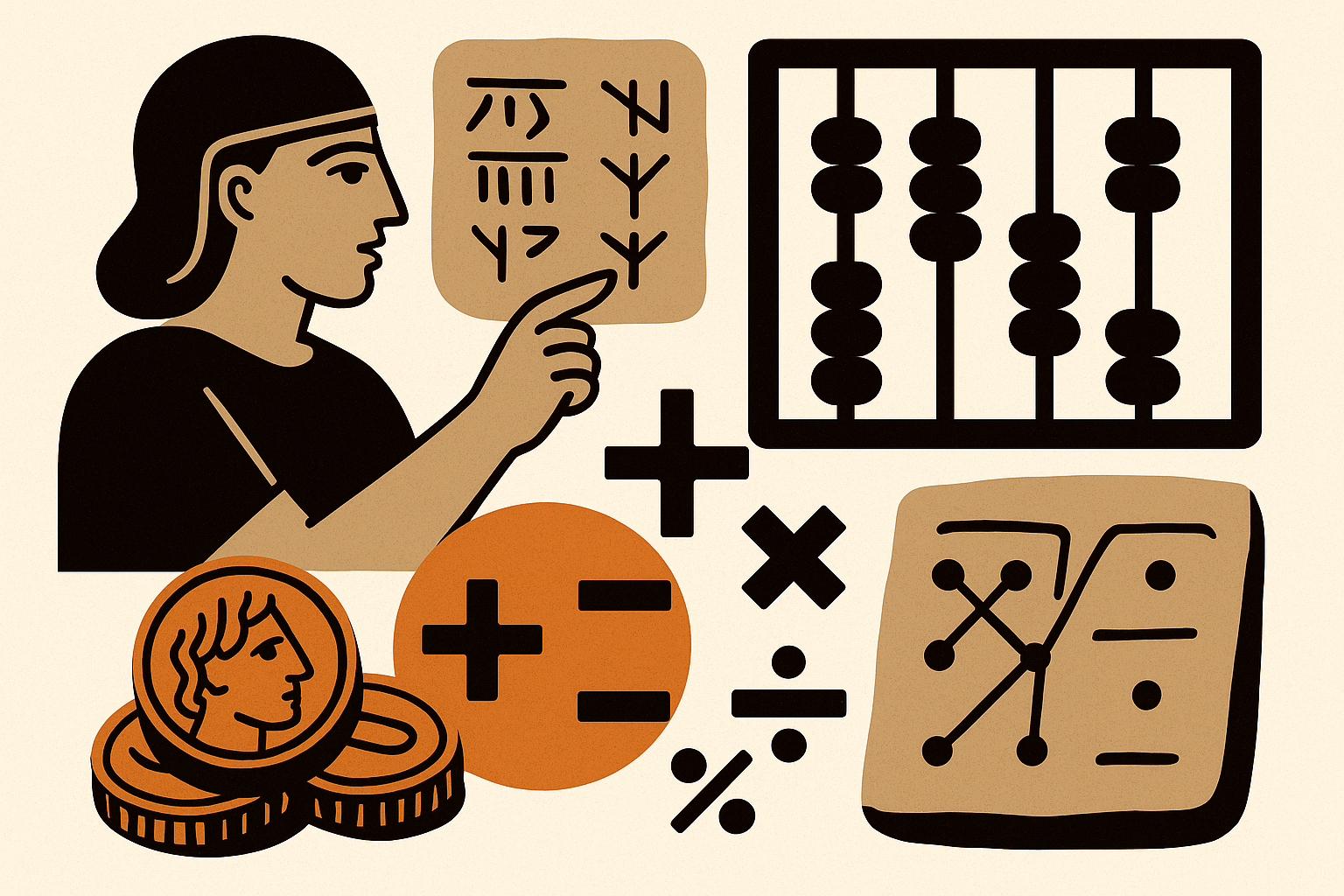
Mathematics was central to accounting long before modern concepts of algebra, statistics, or spreadsheets. Ancient accountants needed basic arithmetic skills: addition, subtraction, multiplication, and division were used daily to calculate totals, balances, and shares. For instance, if a farmer deposited 120 bushels of grain with a temple and later withdrew 30 bushels, the remaining balance was calculated and recorded. Such problems mirror word problems found in today’s classroom math, demonstrating practical applications in business and government.
Accounting also had an educational aspect in the ancient world. Scribes in Mesopotamia and Egypt spent years learning to read and write complicated scripts and understand mathematical operations. Their education prepared them for important administrative roles—jobs as accountants, tax collectors, or overseers of public works. Education in accounting and mathematics laid the groundwork for complex societies by ensuring resources were properly managed and records were accurate.
Today’s systems of financial and managerial accounting are far more sophisticated, but they rest on the same foundational ideas established by ancient peoples. The unit of account, the importance of bookkeeping, and practical mathematical skills remain as essential now as they were thousands of years ago. Studying ancient accounting not only teaches us about history but also emphasizes enduring lessons about clarity, responsibility, and the role of mathematics in daily life.
In summary, ancient accounting shaped the way human civilizations understood value, managed resources, and built institutions. Its legacy lives on, offering valuable insights for students, business professionals, and anyone interested in how numbers and records influence our world. Whether designing a budget, running a business, or simply solving everyday math problems, the lessons of ancient accounting remain relevant and practical.