Demystifying Statistics for Class 10: Practical Skills for Real Life and Money Matters
Statistics in Class 10 is more than just calculations—it's a gateway to understanding and interpreting the world, with important applications in personal finances and daily decision-making. This article explores how Class 10 students can connect statistics to real-world scenarios, focusing on money management, clear mathematical reasoning, and the importance of learning these skills for life beyond school.
Statistics is a subject that makes numbers meaningful by helping us organize, understand, and interpret data collected from the world around us. In Class 10, statistics is introduced not just as abstract formulae but as a practical tool that students can use in countless aspects of everyday life—including finances and decision-making. Understanding the basics at this stage can pave the way for more informed choices, critical thinking, and smart money management in the future.
At its core, statistics involves gathering facts or data, arranging and representing them systematically (such as in tables or graphs), and then analyzing them to discover patterns, trends, or underlying truths. For Class 10 students, the most important concepts typically covered include measures of central tendency (mean, median, and mode), range, and graphical representation of data. These skills are not just part of exams—they’re foundational tools that can be put to use right away.
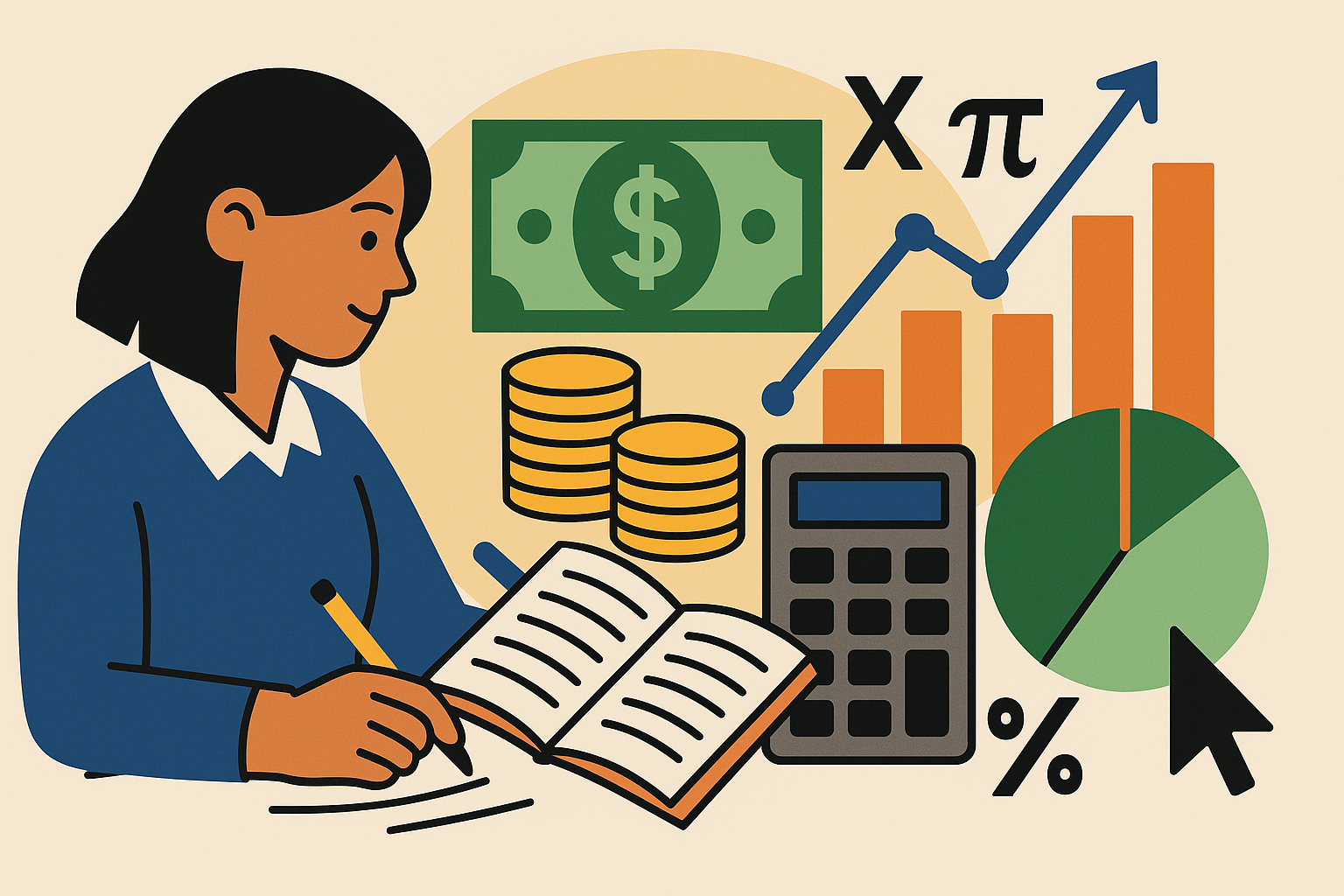
Consider, for example, how statistics applies to personal finances. Suppose a student keeps track of weekly allowances over several months or notes their daily spending on lunch. By calculating the mean, they can determine their average weekly or daily expenditure, which helps in planning and budgeting. Understanding the median can be vital when outliers—like unusually high or low expenses—might distort the picture. By studying the mode, students can identify which spending amount occurs most frequently.
This knowledge isn’t limited to pocket money. Basic statistical skills are used in daily life, such as comparing prices at different stores, analyzing mobile phone data plans, or even evaluating classroom test scores to gauge performance. For instance, if a student wants to see which mobile plan gives the most data for the lowest average price, compiling plans and calculating averages can simplify the decision. In a real workplace or business context, these same skills are critical for tasks like analyzing sales trends or managing inventories.
Class 10 statistics also encourages vital mathematical habits: asking the right questions, analyzing the reliability of information, and communicating findings precisely. In an age where people are bombarded with news headlines, advertising claims, and social media statistics, being able to critically assess data and spot misleading averages or cherry-picked results sets students up as informed citizens.
Globally, mathematics education—including statistics—varies based on curriculum and local practices. In countries such as China and the United States, mathematics takes up a significant portion of classroom time because of its perceived importance in personal and economic development. Whether it's budgeting, saving, investing, or understanding loan repayment, the ability to interpret financial information is essential in daily adult life, and it starts with solid statistical foundations.
For many, the beauty of statistics in Class 10 is its immediate relevance. Teachers are increasingly turning to practical, relatable examples—like analyzing class survey results or real household budgets—so students can see statistics in action. This hands-on approach not only builds mathematical confidence but also shows young learners how critical thinking and basic mathematical tools can transform everyday information into powerful insights.
In conclusion, Class 10 statistics is more than just a chapter in a textbook—it's a stepping stone to understanding patterns, managing money wisely, and making better decisions throughout life. With real-world examples and a strong focus on practical skills, students are well-equipped to interpret the numbers that shape the world around them.