Practical Paths: Connecting Math Education to Everyday Life
Math education is most powerful when it goes beyond the textbook, connecting with real-world experiences—especially when it comes to finances. This article explores how practical learning and clear explanations can help all students understand the true value of mathematics.
Mathematics is often seen by students as a series of abstract concepts and procedures, distant from their daily lives. However, education experts around the world are recognizing the powerful benefits of teaching math in ways that relate directly to practical situations. By adopting methods rooted in real contexts—especially those dealing with money and everyday decisions—mathematics education becomes both more accessible and more engaging.
One of the core goals of modern math education is to move beyond rote memorization and to help learners understand the underlying ideas behind numbers, operations, and patterns. Approaches like Singapore Math, widely used in primary schools, focus on building deep conceptual understanding by breaking problems down into concrete, visual, and abstract steps. This allows students to see mathematics not as a list of rules, but as a dynamic system for solving genuine problems.
Money provides an ideal context for making mathematics concrete. From an early age, children encounter coins, prices, and calculations in shops or markets. Teachers can harness these daily experiences by designing lessons around budgeting projects, shopping simulations, or even small classroom businesses. For example, students might be given a budget to plan a class party or asked to compare unit prices to find the best deal. Such activities teach not only arithmetic, but also important life skills like financial responsibility and critical thinking.
Educators worldwide recognize the need for clear explanations in math classrooms. In countries like Japan and Singapore, where students regularly achieve strong results, lessons often focus on step-by-step reasoning and encourage students to explain why a solution works, rather than just how to do it. This approach helps solidify understanding and gives students the confidence to handle new or complex situations.
Real-world applications extend beyond money. Concepts like measurement appear in cooking, building, or traveling; geometry can be observed in art and architecture; data analysis underpins everything from understanding weather reports to making sense of sports statistics. Highlighting these links helps answer the common student question: ‘When will I ever use this?’ When teachers connect math to situations that matter to students and their communities, motivation and learning deepen.
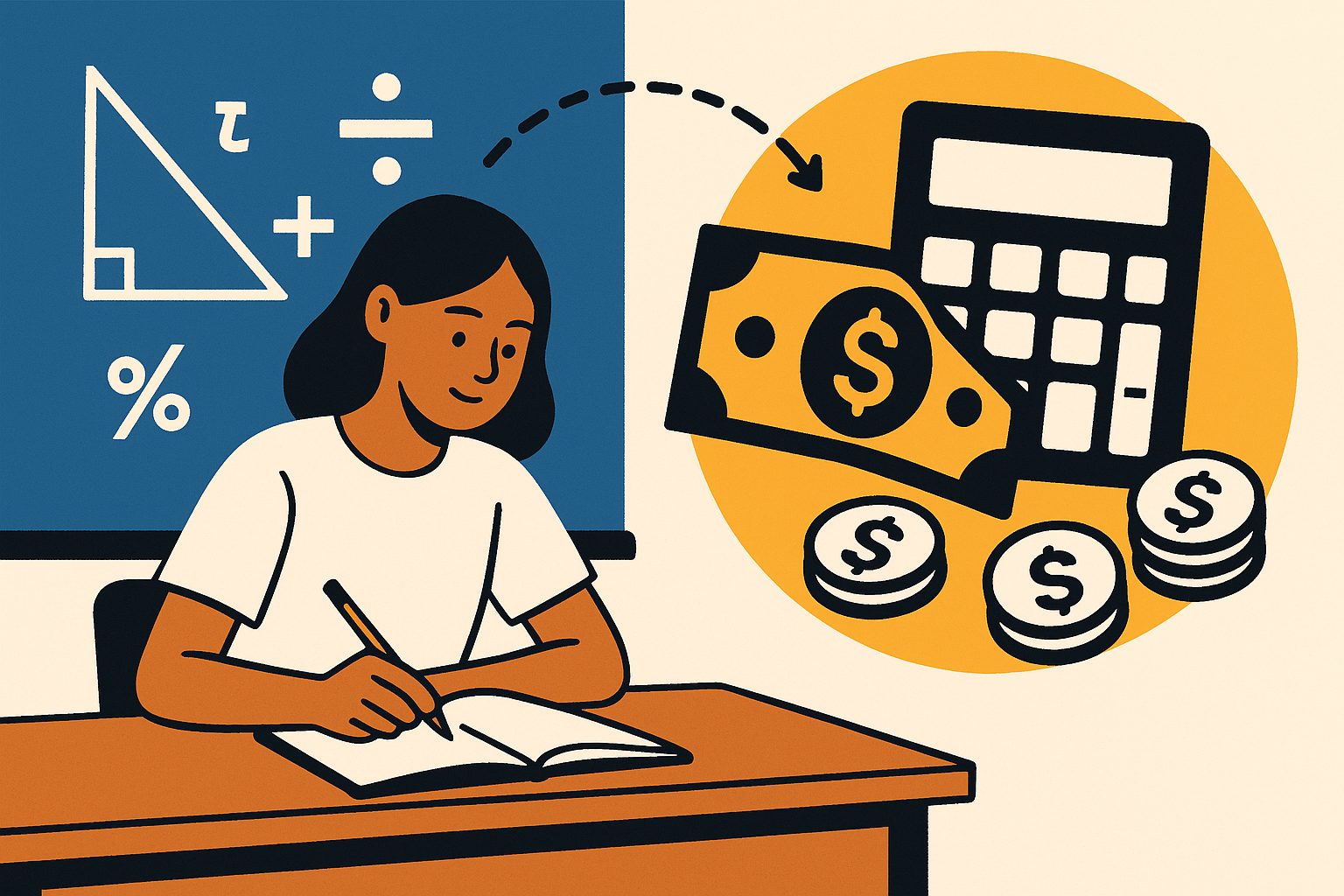
Practical learning in mathematics isn’t limited to elementary classrooms. In secondary education, topics such as percentages, interest rates, and taxes become highly relevant. Calculating discounted prices during sales, understanding how loans work, or predicting future savings with compound interest are all opportunities for students to use math to make sense of the financial world. These lessons lay important groundwork for adulthood.
There are ongoing debates about the best ways to structure math curricula. While some reforms, such as the 'New Math' movement of the 20th century, emphasized abstract reasoning and advanced concepts from an early age, many educators now emphasize balancing theory with practice. Methods like those in the Montessori tradition encourage students to explore mathematical ideas using hands-on materials, reinforcing the connection between numbers and the real world.
For practical math education to succeed, support from families and communities is invaluable. Encouraging children to manage small amounts of money, help with household budgeting, or discuss everyday decisions involving numbers can extend learning beyond the classroom. Partnerships between schools and local organizations can provide even broader experiences, from visiting banks to collaborating on community projects.
Ultimately, the aim of math education is to empower students—not just to pass exams, but to make informed choices and solve problems in daily life. By focusing on practical learning, clear explanations, and real-world connections (especially with money), educators can help build lifelong mathematical confidence and understanding.