Math Education: Making Numbers Matter in Everyday Life
Practical learning and clear, real-world connections are transforming math education. By linking classroom lessons to everyday experiences—especially those involving money—students discover not only the relevance of mathematics, but also its power to shape confident, informed decisions in life.
Mathematics is a subject that often evokes strong feelings—enthusiasm for some, anxiety for others. But beyond formulas and theories, math is a fundamental tool for navigating the complexities of everyday life. Modern math education seeks to move beyond rote memorization, focusing instead on practical learning and clear explanations that help students see math as a useful, accessible part of their world. This approach is especially impactful when math is tied directly to real-world situations, such as managing money, budgeting, and understanding financial decisions.
For decades, educators and policymakers have debated the best ways to teach math. The traditional approach relied heavily on memorizing procedures and solving abstract problems. While these skills are important, this method often left students struggling to understand why math mattered beyond the classroom. In recent years, new methods—like Singapore Math and blended approaches in the United States—have placed greater emphasis on problem-solving, reasoning, and concrete applications.
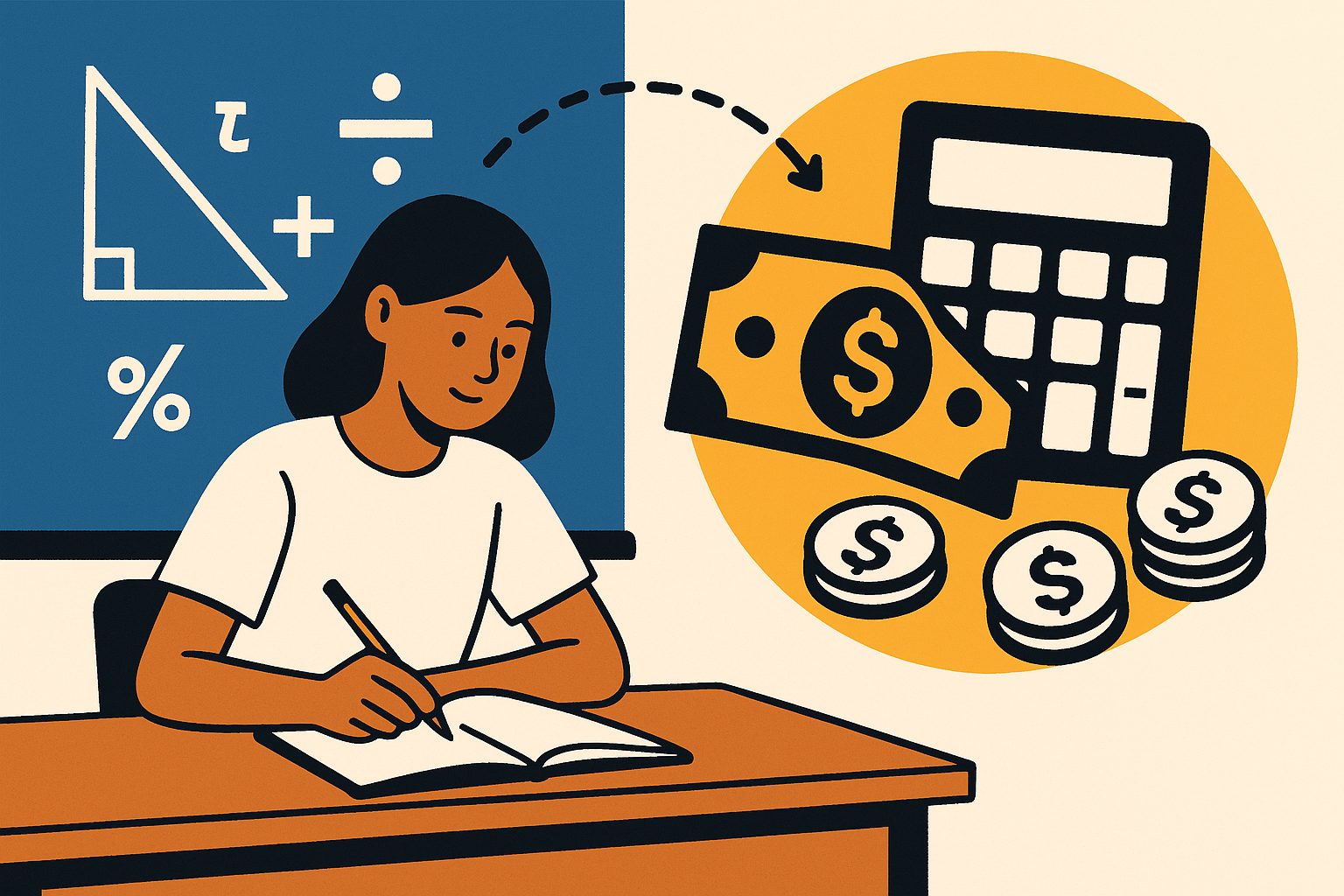
One of the most effective ways to make math education meaningful is by connecting classroom lessons to money management. Money is a universal aspect of daily life, and mathematical skills are essential for everything from shopping and saving to investing and understanding loans. For instance, calculating the discount on a sale item, comparing mobile phone plans, or figuring out how much interest will accrue on a credit card bill are all practical applications that demand mathematical reasoning.
Teachers who use real-life money scenarios in their lessons help students appreciate the immediate value of what they're learning. Simple activities, such as creating a mock budget or planning a grocery shopping trip within a set limit, turn abstract numbers into tangible choices. Students might be asked to divide a weekly allowance between savings and expenses, evaluate the best buy among similar products, or calculate how much time is needed to save for a desired purchase with regular deposits.
Beyond personal finance, real-world mathematical connections can be found in the news, technology, and even sports. From interpreting interest rates in the media to understanding probability in games, math gives students the tools to make informed choices and to spot misleading information. In an era where financial decisions are increasingly complex, empowering students with financial literacy from an early age can lead to smarter, more responsible adults.
Internationally, countries like Singapore have gained recognition for their pragmatic approach to math education. The Singapore Math method focuses on mastery through step-by-step progression, problem solving, and plenty of visual aids, making abstract concepts more concrete. These methods encourage understanding rather than memorization, supporting students in both academic achievement and real-life application.
It's important to recognize that the effectiveness of math education doesn't depend solely on the curriculum—teachers play a crucial role. Clear explanations, patience, and the ability to connect math to students' experiences are vital. By creating an environment where questions are encouraged and mistakes are part of learning, teachers can help students overcome math anxiety and build confidence.
The future of math education lies in making numbers matter for students. This means focusing on practical learning, clear explanations, and real-world applications—especially those involving money and decision-making. Through thoughtful teaching and meaningful experiences, we can show students that math isn't just a subject to pass, but a skill for life.