The Importance of Financial Literacy: Empowering Choices Through Practical Education
Financial literacy is an essential skill for navigating daily life, yet it is often overlooked in traditional education. By connecting foundational mathematics to real-world money management, individuals can develop the abilities and confidence needed to make wise financial decisions. This article explores practical approaches to financial literacy and highlights its vital role in empowering individuals for lifelong success.
Financial literacy refers to possessing the skills, knowledge, behaviors, and attitude necessary to make informed decisions regarding money. As modern societies become increasingly complex, the ability to manage personal finances—from budgeting wages to understanding investments and loans—has never been more important. Yet, many people may leave school lacking the basic financial skills needed for independence, underscoring the growing demand for better financial education.
Much like reading and writing, financial literacy is fundamental for daily life. People interact with money every day, whether shopping at supermarkets, paying bills, or planning for education and retirement. A strong grasp of basic money concepts can prevent costly errors and open doors to greater opportunities. For example, understanding interest rates can help someone avoid getting trapped in debt, while knowing how compound interest works can encourage saving for long-term goals.
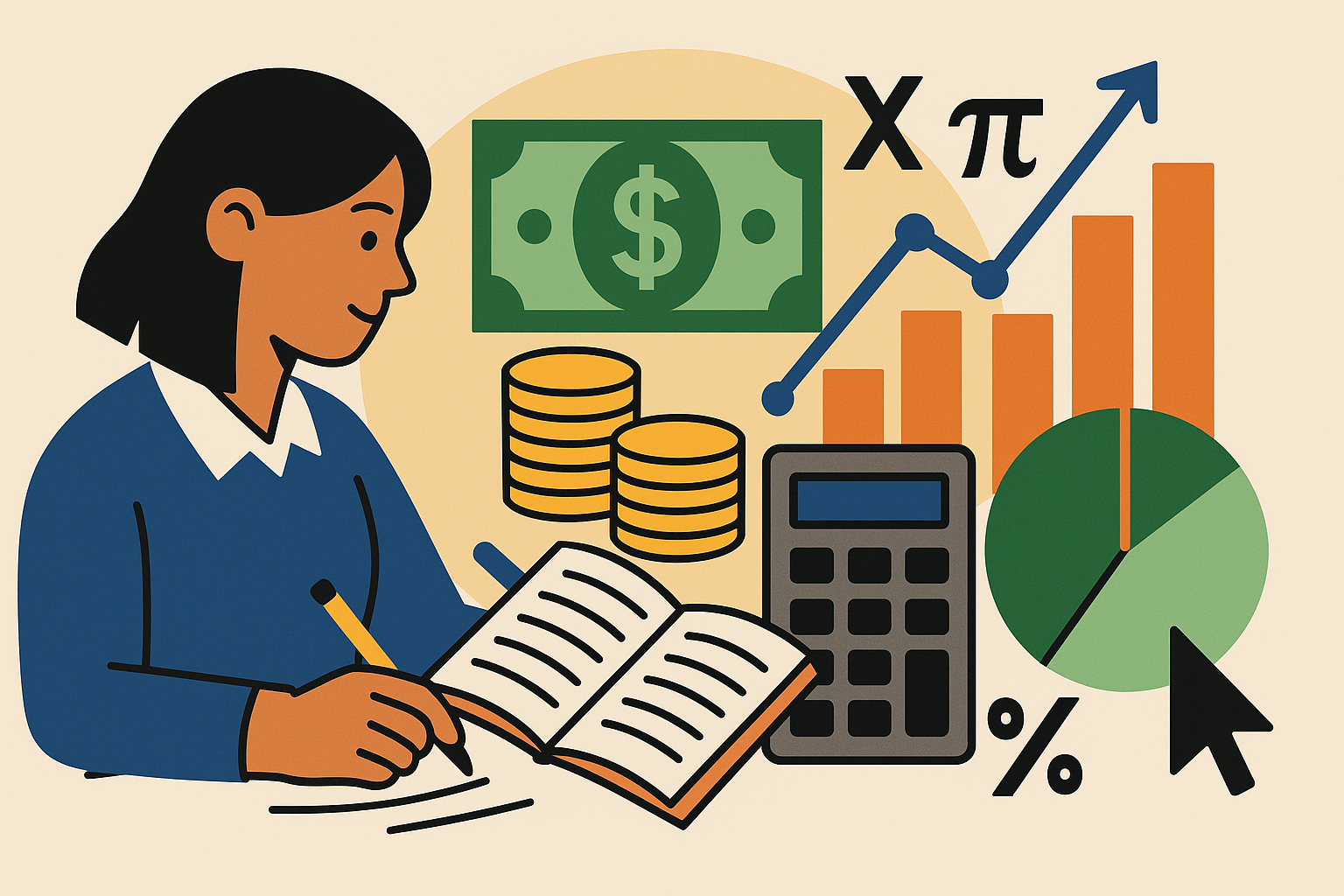
Financial literacy is closely tied to mathematics, particularly topics such as percentages, ratios, and simple calculations. Consider budgeting: it requires listing income and expenses, then using subtraction and division to determine how much can be saved each month. Similarly, when deciding which bank account or loan to choose, percentages and interest rates must be compared. These actions rely on mathematical understanding applied to real-life situations.
Across the world, education systems are recognizing the need to formally teach financial literacy. In the United States, for instance, several states—including Florida—now require some financial literacy education for public school students. Such curricula may cover budgeting, credit cards, saving, investing, and avoiding financial pitfalls. Meanwhile, in countries like India and China, there is growing awareness that broad literacy initiatives must also include financial education to keep pace with changing economies.
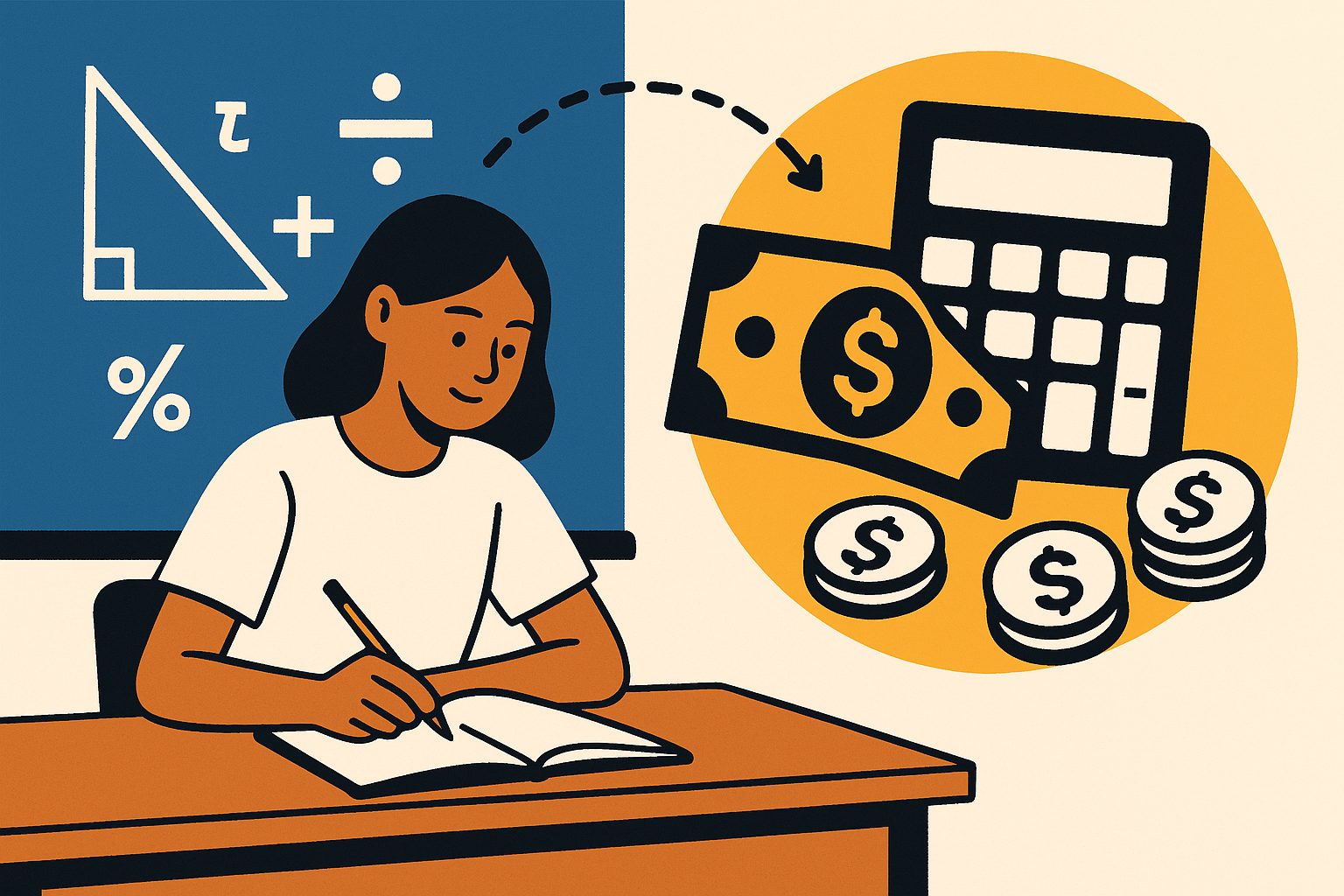
Practical learning is key to making financial literacy both relevant and lasting. Instead of theoretical lessons alone, students benefit from hands-on activities such as creating mock budgets, playing financial decision-making games, and analyzing real or simulated paychecks. These experiences help demystify abstract mathematical concepts, turning them into useful tools that solve everyday problems. For instance, learning how to calculate and compare the costs of different cellphone plans can make mathematics personally meaningful.
Financial literacy also extends beyond school. Adults face a range of complex financial choices, from choosing health insurance to planning for retirement. Community workshops, online resources, and workplace seminars all play important roles in lifelong financial learning. Regardless of age, individuals can continue developing their financial skills by tracking spending, using budgeting apps, and seeking trustworthy sources of financial information.
Finally, financial literacy is not only about managing one’s own money but also about participating responsibly in society. A financially knowledgeable population is less vulnerable to fraud, more likely to invest productively, and better equipped to contribute to economic growth. By integrating practical financial skills into education and daily life, individuals can make confident choices that support their personal well-being and the broader community.